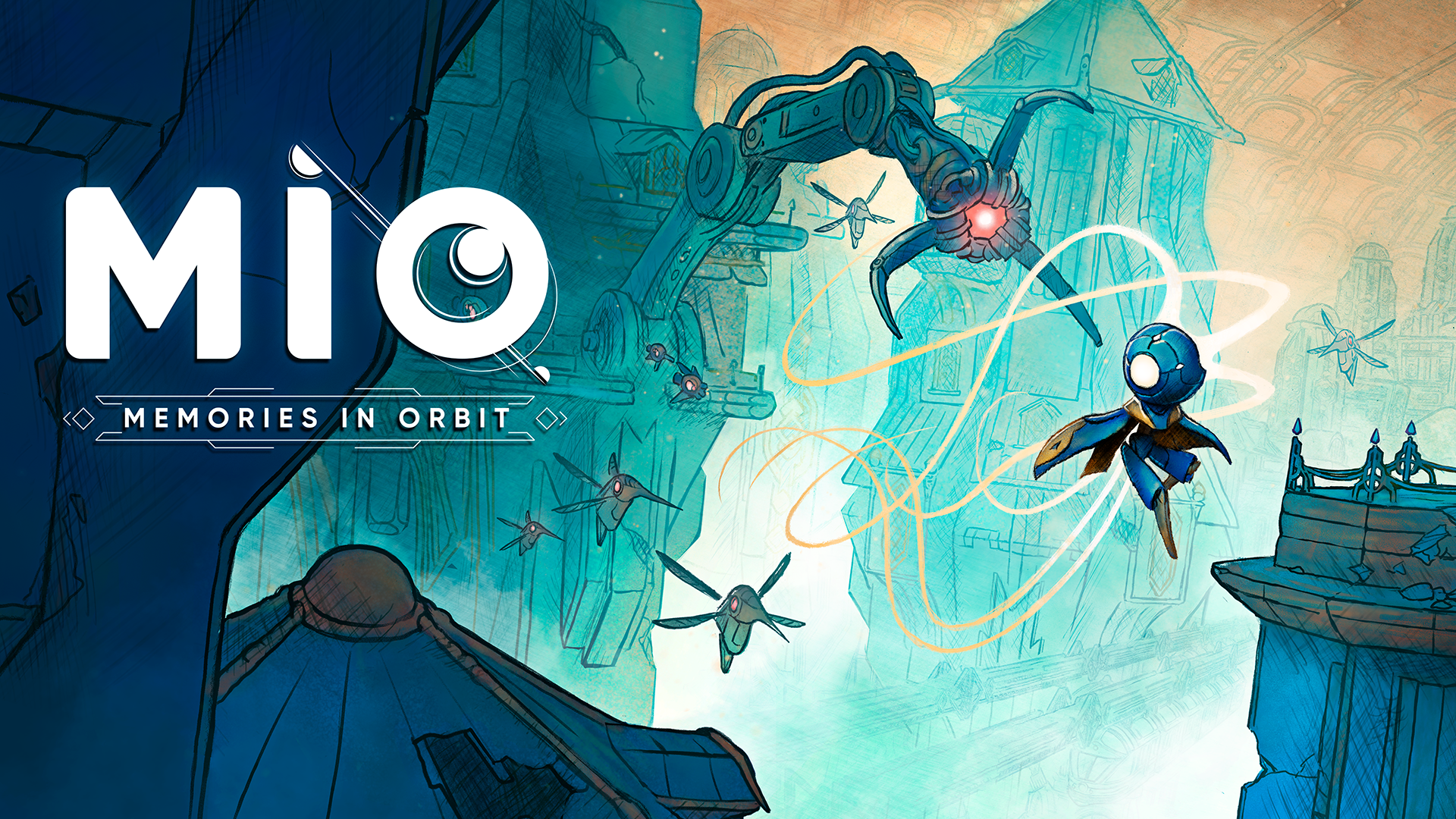
Last Updated on Jan 19, 2026 @ 16:03:24 PM.
In the past, I was granted the opportunity to try out the demo for the game MIO: Memories in Orbit, playing out the first sections of the game, but now I have been able to try out the entire game before its official release, allowing me to see everything that was on offer while also coming to terms with the numerous challenges that would block my path.
During my time with MIO: Memories in Orbit, I was able to explore as much of the game as I could while also battling various bosses, exploring the incredible locations on offer, maximizing the potential of the game’s traversal mechanics, and even trying to unlock all the secrets that were hidden away for me to find. However, due to the game’s Metroidvania-based gameplay and the fact that there are no markers revealing the locations of items, there is no telling if I explored everything the game had to offer, or if I missed entire plot points or secret locations.
MIO: Memories in Orbit Has an Incredible Art Design That Makes the World Feel Both Isolating and Freeing All at Once
When it comes to MIO: Memories in Orbit, I feel it would be a strong start to talk about the game’s world and its magnificent art design that is used throughout the game, with my biggest challenge being to give this game’s art style justice and props for the incredible world that has been created for it. Whether it be the games’ locations, characters, bosses, or even attacks, the overall art design is mesmerizing as it brings a world full of robots and death to life in a really unique way.
Without spoiling too much of the game’s story, players will spend their time within MIO: Memories in Orbit exploring what would best be described as a station of some sort that was originally accessed by organic life but has soon fallen dormant, only to be inhabited by machines and creatures.
During the player’s adventure about this station, they will venture to various biomes within the game, each with its own twists on the station, showing both the original glory of said station and the decay that has followed over the years.
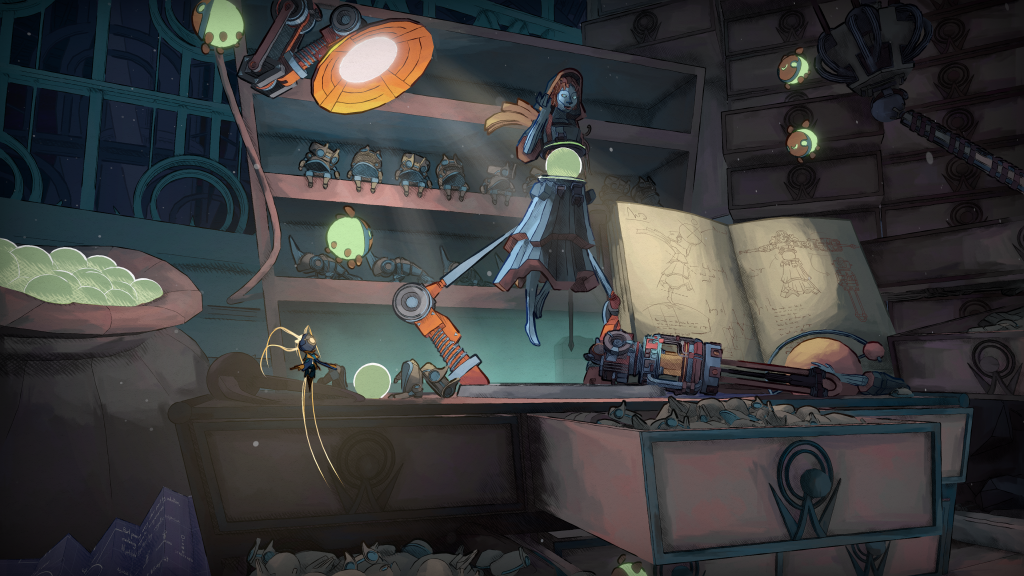
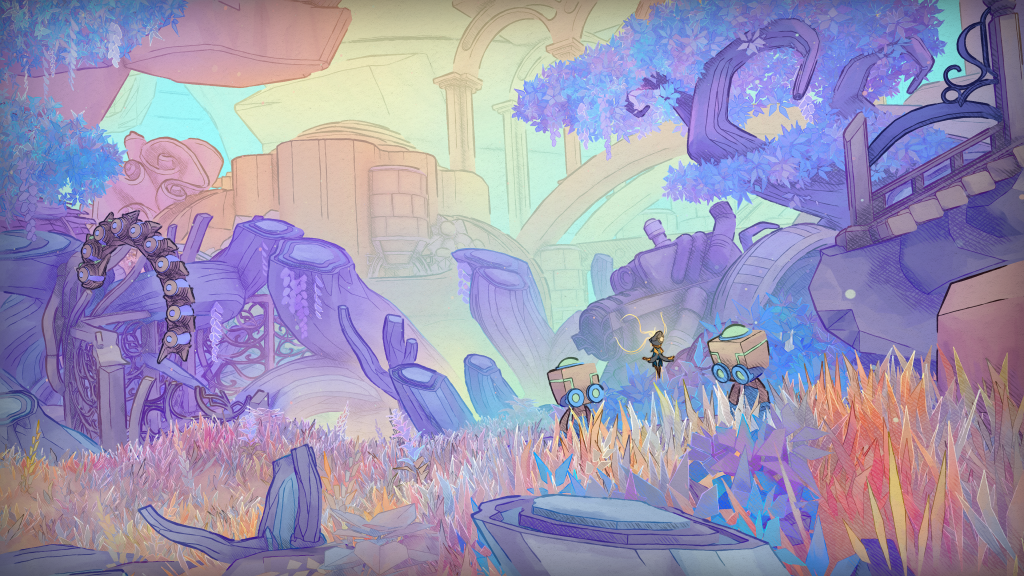
For me, while playing MIO: Memories in Orbit, this is something that constantly took my breath away, as the incredible detail work that was put in by the developers was astounding, to say the least, as every little rock, leaf, beam, light, and so on seems to have been meticulously created so that it would look perfect for players upon their first time booting up the game.
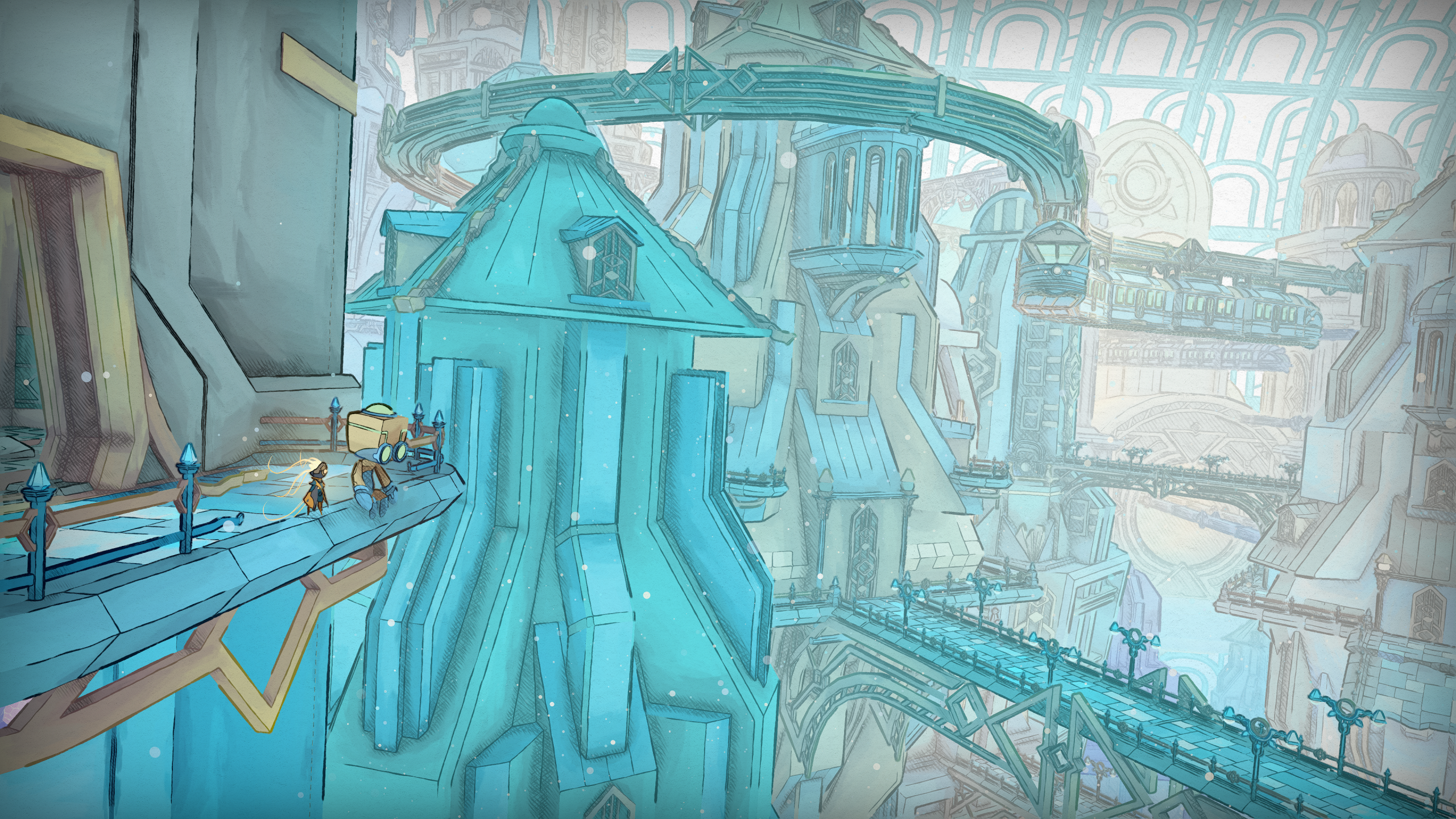
To add to this, due to MIO: Memories in Orbit being a 3D side scroller, the devs even worked on backgrounds for these biomes that helped to bring the world to life, making it feel bigger than just what we could explore, but that there was more to this than what we could see.
However, the biggest shock to me was simply the overall art design of this world, as its art design isn’t just simply a graphical world but instead looks more like a pencil-like drawing with actual faint detail lines on certain sculptures, making it feel as though you are running through an artist’s sketchbook in certain situations while also not being overused and toning down the game’s detail and amazing look.
Along with these details, the coloring of the game world is fantastic, as it isn’t overwhelming but instead often uses cool tones with a watercolor-type vibe that instills a sense of calm in certain areas, while also using warm and harsh colors to encourage the feeling of dread at just the right time.
The Enemies Are a Force to Be Reckoned With, and the Bosses Are Just as Horrifying, With a Hint of Beauty
As I have said above, the world of MIO: Memories in Orbit is incredibly designed, but the developers didn’t stop there, as the enemies that the player will encounter are also as dazzling as the game’s world, but are unfortunately incredibly deadly.
Now, this isn’t to say that the game’s world isn’t deadly, as trust me, the platforming can be a real pain, due to a lot of easy situations in which you can easily be caught off guard or struggle to figure out due to the puzzle like nature, but the game’s enemies are on a whole other level in terms of art design and gameplay mechanics.
A big part of MIO: Memories in Orbit is the combat and fighting through various enemies to eventually reach a boss that is blocking the story-critical path that you want to follow, and throughout the player’s adventure, they will come across dozens upon dozens of enemies that all act in unique ways with their own bizarre and creative designs.
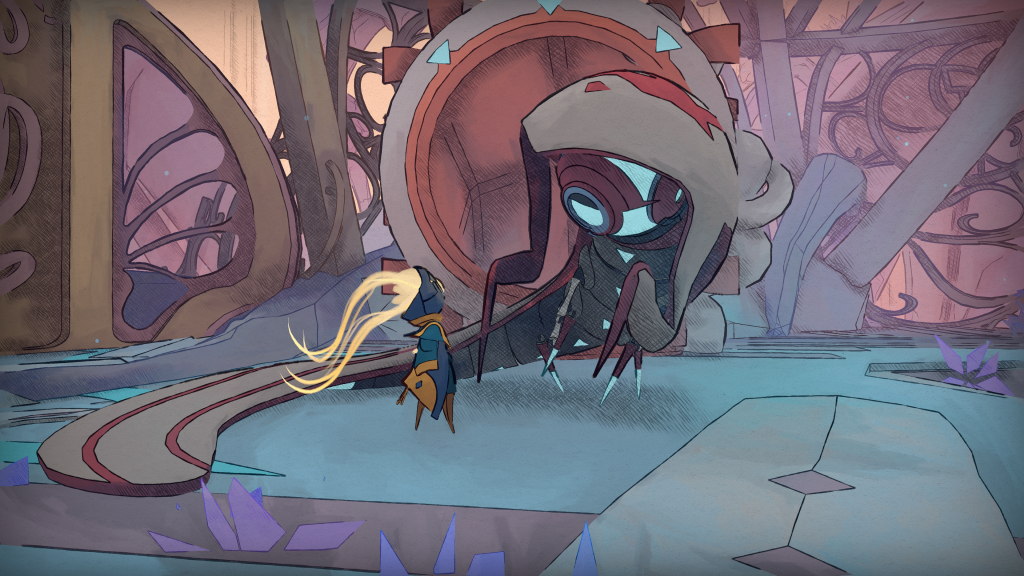
During my playthrough, I often enjoyed coming across new variations of the enemies that would be hiding around each corner, as they all had fun new mechanics that I would have to master and adapt to in order to survive, whether that be a lizard spitting its tongue at me, a drone shooting ice at me, or a plant that hits me with a long plant tongue (which I hate with all my passion). They each had beautiful art designs, but felt challenging and fun to fight.
That being said, the enemies, yes, were brilliant and fun to experience whenever I had the chance, but the bosses in MIO: Memories in Orbit were the icing on top of the cake, as each boss felt entirely new with their own designs and combat mechanics that kept me on my toes at every chance encounter. Since I never knew when or where I would bump into a boss, I was always on edge, waiting for one to be waiting around a corner, especially when a healing pool would be nearby, and I was never disappointed.
Often, I found myself stumbling into a boss fight without even realizing that a room would contain a boss fight, and I could feel myself shivering with anticipation as each encounter was a mystery. In a lot of games, players likely learn small portions of a boss as they progress towards it, as enemies share attacks, weaknesses, and traits that a boss would also have to help the player prepare for said boss fight.
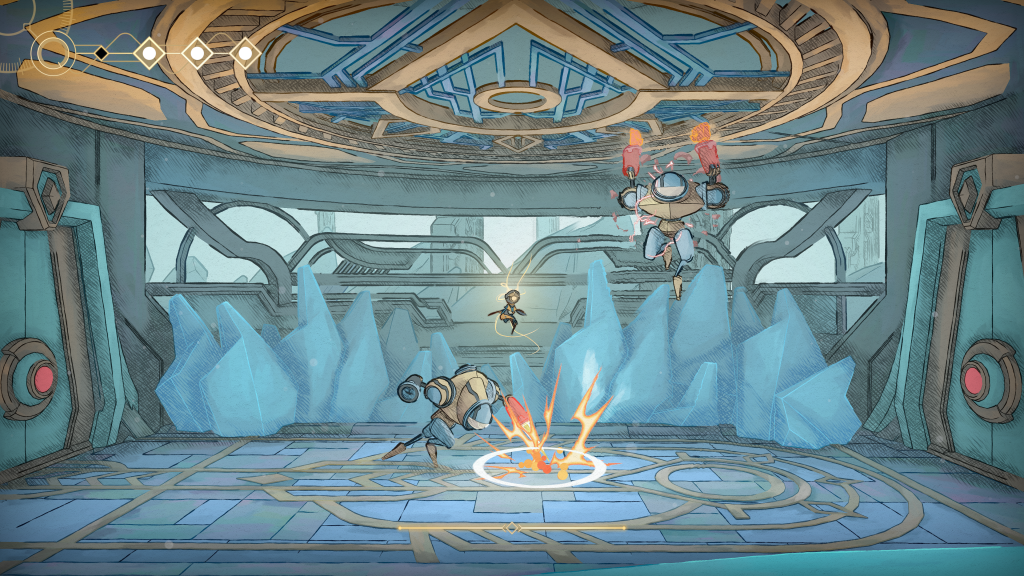
MIO: Memories in Orbit didn’t feel as though it did this, as nearly every boss fight I entered felt like a completely new experience, with me panicking as I attempted to save myself from their relentless attacks. Now, yes, the game does provide you with the time to learn traversal mechanics that are key for the boss fight up ahead, which is good, but for me, as someone who loves a challenge in a game, I found it refreshing to constantly enter a boss fight and think to myself, “What the blazes am I walking into?”
What made these bosses stand out even more simply comes down to the fact that there were no other enemies like them within the game. It wasn’t like you would encounter smaller versions of them earlier on, and it wasn’t a big shock to see them; it was the complete opposite, with numerous bosses having entire designs created solely for them that you would never see again.
Adding to this was the game’s watercolor art style, as it made these bosses look incredible in more ways than one, as their combat styles suited their overall designs, while also causing the player to have sympathy for said bosses, as not all of the bosses that you encounter, as I said earlier, are just simple machines, but instead share similar traits with animals like deer, lizards, and even birds.
For me, this was probably one of the best parts of MIO: Memories in Orbit, as the enemies and bosses are what make a game like this incredible. Although a story is very compelling and drives you towards finding these bosses, the bosses themselves and their fresh designs and mechanics, or the enemies you encounter on the way, are what make MIO: Memories in Orbit stand out to me as a game and as a fun Metroidvania and platformer experience.
MIO: Memories in Orbit Focuses on Tough Combat That Punishes Players as Much as it Rewards Them
Now I would like to start by saying MIO: Memories in Orbit is a very challenging game and is designed to be just that. It isn’t designed to be a walk in the park that players can sit back and do with their eyes closed; it is a tough game that can make you rage, which I will admit I personally did sometimes, but that is not to say that the combat isn’t fun or easy to grasp with enough time.
As with any game, players will need to take their time and learn how the combat works within MIO: Memories in Orbit, which starts slow with just the simple abilities to jump and attack with nothing much else to rely on, but as you progress within the game, you do earn new abilities that can make life easier if you use them right or harder if you fumble the buttons like I do.
Now, for a lot of players who are experienced with Metroidvania-like games, coming to terms with abilities that help you maneuver, dodge, and even nullify abilities will feel as natural as breathing, but for some players, these abilities will have a learning curve, especially in regard to mastering them to their fullest extent.
This is something that I believe MIO: Memories in Orbit does well for players, as it doesn’t throw them in the deep end straight away, but instead allows them time to get to grips with the abilities at their disposal and how they can help them in combat as well as traversal before throwing them in a relatively tough boss fight.
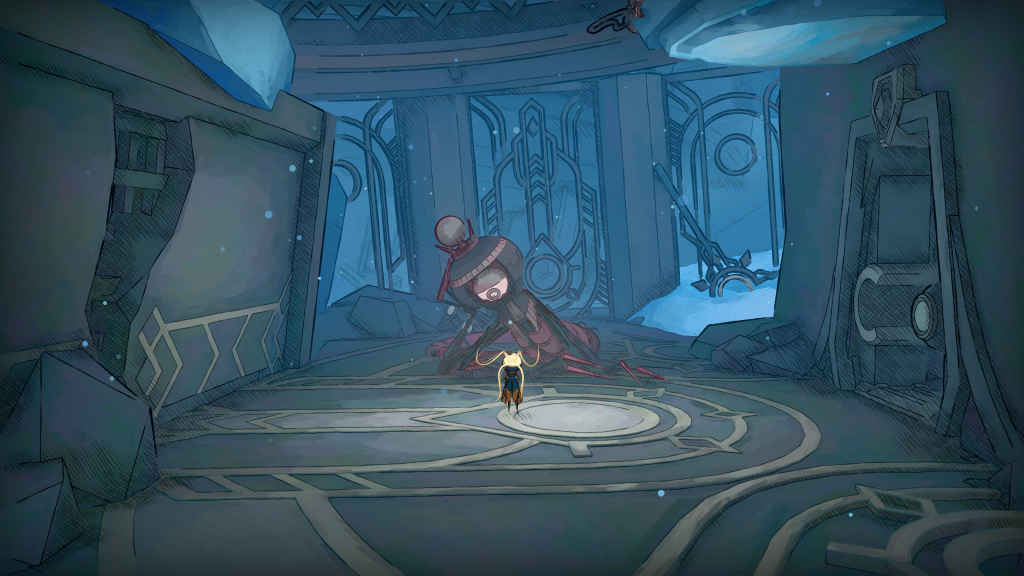
Along with allowing players the time to learn between boss fights with the various enemies along the path between them, there is also the difficulty curve to consider as well. In similar games to MIO: Memories in Orbit, difficulty curves can be a big challenge for the developer as they can easily make a boss encounter too easy or too hard in the early game, either providing players with a false sense of success by destroying a boss for the first time, or by gatekeeping the player by demolishing them seconds into a fight.
This is a tough balance that a lot of games struggle with, but after I had played MIO: Memories in Orbit, I can safely say that this wasn’t the case, as each boss felt reasonably tough as a challenge, with me being able to defeat some bosses on my first try, while some bosses took numerous attempts and a lot of swearing with arms raised in the air in triumph after beating them.
As an addition to the game, the devs have even gone as far as to provide additional aids to players who aren’t as familiar with games like this, or even for those who are just looking for an easier experience regarding certain settings that can be turned on or off. These settings include erosion, which reduces a bosses health gauge the more you lose to it making the fight smaller in a sense, providing a small healing effect while your standing on the floor meaning when in a boss fight you can heal up if you get a chance, and even a pacifist mode which prevents normal enemies from attacking the player, unless they attack first, but sadly this doesn’t effect bosses.
For me, this was an amazing addition by the developers as it ensures that there is no gatekeeping within the game and provides a boost to players who aren’t as confident in these types of games to give it a go, and that is a big positive!
The Story is Enough to Make a Grown Man Cry, and He Most Definitely Did
Now as said above, I will do my darndest to avoid spoiling the story for MIO: Memories in Orbit as a story like this only comes around once in a blue moon and should be experienced by the player, but what I can do is talk about some of the early story of the game and how it impacts the game’s world and characters that you can meet.
As the heading above suggests, MIO: Memories in Orbit isn’t an overly happy and ecstatic game where you are constantly smiling at your decisions and the outcomes that you see, but is instead a very sad and haunting story that will likely pull at the heartstrings of anyone playing the game.
Although a lot of the game’s story is revealed through lore items hidden within the game world, a lot of the storytelling is done by the game’s surrounding areas. Atmospheric storytelling is a very important tool in game’s as it provides the player with a deeper sense of what is going on within the surrounding area, for example, when you enter a room and see numerous dead robots, you immediately feel sad and worried about what is to come, and this is something that is constantly on show within MIO: Memories in Orbit.
Whether it be in the foreground as you run through the ramshackle remains of a civilisation, or in the background that you cannot interact with, but instead something that you can only see as an observer, there are plenty of storytelling methods taking place within MIO: Memories in Orbit that showcase the game’s emotional range.
Even though the player is able to experience the story through text-based conversations between NPCs and even some small voiced cutscenes, the bulk of the game’s backstory is hidden within the lore pieces hidden around the game world that most gamers will likely miss if they don’t explore properly, but from my personal experience with the game, I wholey suggest searching every nook and cranny for these lore pieces as it brings the whole game together and makes it even more impactful at the game’s conclusion.
The most impactful part of the game’s story to me was the different characters you could meet on your journey. Not all the characters have major roles, not all the characters talk or even move, but each character feels just as integral as the last. Whether it be each character having a name, even characters who just talk in the background, characters showing different forms of emotions in both their actions and words, or just simply me growing attached to certain characters and their mannerisms.
Each character was entirely unique and had their own part to play within the game’s story, even if it may have been to add suspense or to build up fear regarding certain situations or characters. Each NPC felt like a major role that encourages the player to move forward while also providing a warning of caution.
Throughout my time with MIO: Memories in Orbit, I was constantly finding myself question whether or not I was doing the right thing, or even if I was doing the wrong thing for the right reasons as there are no real options as to whether or not you can do something besides turning the game off and refusing to ever do it, but for me this made the story even more compelling as I wanted to see how the story would end.
Summary
MIO: Memories in Orbit for me was a very fun experience that provided a lot of challenges in terms of combat, while also providing me with the option to downscale the difficulty if I needed to in rather unique ways.
The biggest draw for me was the beautiful world that the game is set in, with the incredible watercolor detail and the breathtaking views that were waiting around each corner.
The story was also very good and was a very big tear-jerker, but it was very challenging to ensure I saw it all due to the hidden lore pieces scattered around the game.
HOURS PLAYED: 17
PLAYED ON: PC
- The world is incredibly made with the perfect use of color and art styles.
- The combat is very intuitive allowing for an easy learning curve, but a punishing end if done wrong.
- The story is very detailed if you take the time to look for the information.
- Traversing the game world can be both annoying and challenging due to the lack of information and punishing parkour.
For more Thumb Wars Gaming coverage, check out our review of Code Violet, or our hands-on preview for the upcoming Noir-Detective game, Obsidian Moon.

Liam is a Senior Editor, Writer, and Critic for Thumb Wars and has been working with the team since day one. Liam is a big fan of all things gaming, as you will catch him playing all of the new releases from every genre you can imagine. Whether you find Liam gaming just for fun or spending his free time streaming, you will always find a smile on his face when it comes to all things gaming.