Last Updated on Jul 30, 2026 @ 12:55:05 PM.
The Relic: First Guardian is almost upon us, set to release in just two days. With it taking a different approach to the tried and tested Soulslike genre, we were lucky enough to chat with In-hyeok Park, the Director at Project Cloud Games about a lot, but primarily combat, the exploration aspects, why it’s deciding to do things differently, and what AI is used. Don’t miss our review of The Relic: First Guardian either.
As this was a written interview, we didn’t have the opportunity to ask follow-up questions.
One click and you're done. Thank you!
Firstly, thank you so much for taking the time to speak with us, especially considering how busy you must be at the tail end of development. For readers who may not be familiar with you, could you introduce yourself and explain your role on the game?
Hello, I’m In-hyeok Park, Director at Project Cloud Games. I oversee the overall development direction of The Relic: First Guardian. I have been directly involved in many areas of the game, including game design, art direction, systems development and programming, world-building and narrative, combat, bosses, and content structure.
Project Cloud Games is a small development team. Each member focuses on their own area of expertise, while I coordinate the overall direction to ensure that every element comes together as a consistent experience. Rather than simply setting the direction, I have worked directly on the game alongside the rest of the team throughout development.
Parrying and defence are arguably among the most important aspects of combat, similar to FromSoftware’s Sekiro. Was it an inspiration?
Yes. Sekiro is one of my favourite action games, and it had a significant influence on the combat in The Relic: First Guardian. I practised kendo when I was younger, so I was particularly drawn to the tension of observing an opponent and deciding whether to attack or defend within a brief moment.
However, we did not want parrying to be the only correct answer. Players can also dodge, guard, and use a variety of weapons and skills. We minimised the stamina cost of attacks so that players could maintain their offensive momentum while focusing their judgement on defensive moments.
Other than Sekiro and perhaps other FromSoftware titles, what inspirations were there for The Relic: First Guardian?
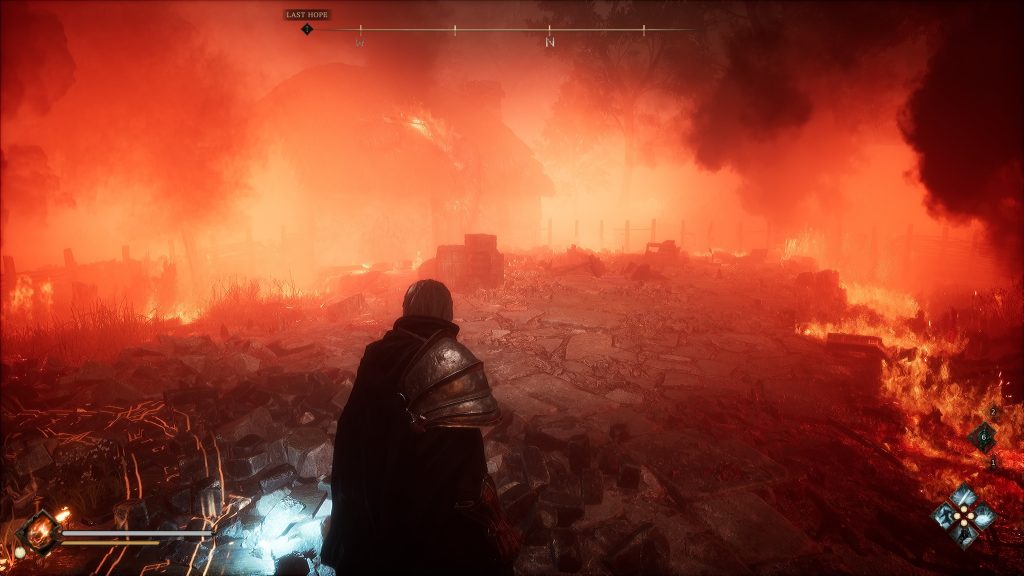
In terms of storytelling, we drew a great deal of inspiration from The Witcher series, particularly the way players naturally discover events and traces of people’s lives while exploring the world. We reworked that idea to fit the structure of our own game, which led to the creation of Field Pages. Players discover fragmented records, and those stories lead them towards new locations, equipment, and boss encounters.
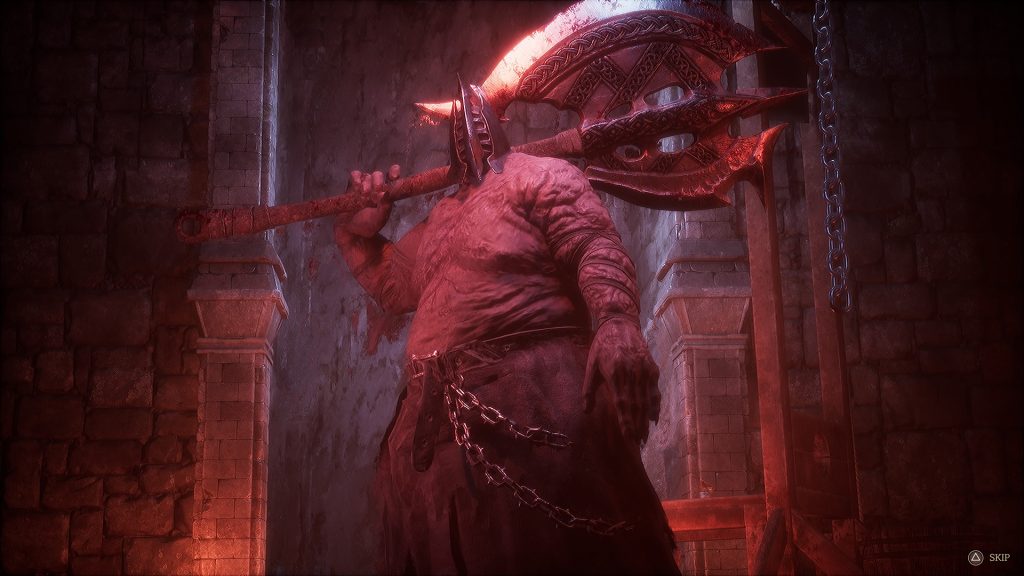
The Relic: First Guardian is full of boss fights many more than most other Soulslikes. Was this intentional? Why are there so many?
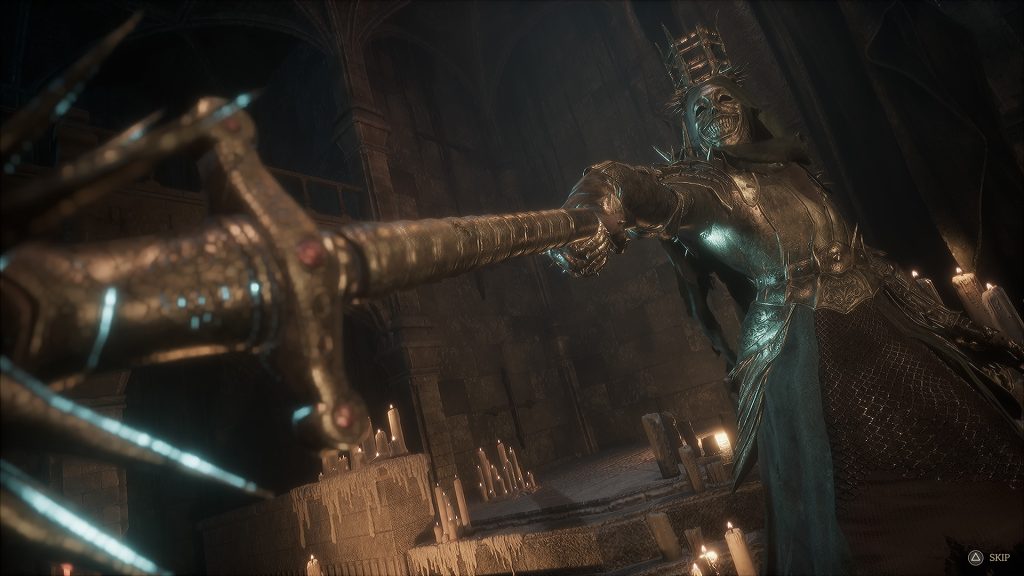
Our original goal was not simply to create a large number of bosses. The core flow of The Relic: First Guardian is exploration, discovery, story, reward, and boss encounter. As players follow an incident to its conclusion, they naturally come face-to-face with the person or being at its centre. The bosses are therefore more than powerful enemies. Each one represents the conclusion of a particular incident or tragedy. As we continued creating these individual stories, the number of bosses naturally grew.
Who, or what, is your personal favourite boss, and why?
It is very difficult to choose only one. The first question we always asked when creating a boss was, “Why did this being become what it is now?” Every boss has their own emotions, history, and reasons for reaching their present state. Their appearance, location, and combat style were all shaped by that background. As a developer, I feel attached to each boss for different reasons. I hope players will experience the game for themselves and discover the boss that leaves the strongest impression on them.
How did you come up with so many bosses while making each one feel so unique? The variety is enormous, with magic users, giants wielding axes, and enemies of completely different sizes, speeds, and styles.
Everything began with a story. Rather than deciding on a weapon or appearance first, we began by asking what circumstances had shaped the boss and why they had become the being the player eventually encounters. Their appearance, location, atmosphere, and combat style naturally emerged from that story and emotion. Some bosses attack relentlessly, as though expressing their anger, while others fight slowly and heavily, as if burdened by regret. The bosses feel different not simply because we deliberately gave them different attack patterns, but because each one began with a different situation and story.
There is also a huge number of weapon skills, allowing players to create very different combat styles. How did you come up with so many skills, and how did you balance them?
The skills began with the movements I wanted to see when using each weapon. For example, my image of a dagger wielder was someone who could quickly slip behind an enemy and strike. We used skills to add movements that we felt were missing from the basic combat. For balance, we considered not only damage, but also activation speed, range, risk, and cooldown time.
Were there any weapons or systems that you developed and later decided to remove?
We did not cut any of the major weapon types. However, early in development, we had a choice system that allowed players to make decisions while exploring. Properly implementing the changes and consequences of those decisions would have required a much larger production scope.
Considering the size of our team and the overall quality we wanted to maintain, we decided to remove it and focus on the core experience of exploration and discovering stories. Most of the other major weapons and systems evolved while retaining their original direction.
With the Soulslike genre becoming so heavily populated in recent years, how are you ensuring that The Relic: First Guardian feels fresh and distinctive?
What mattered most to us was deciding what emotions and lasting impression we wanted to leave with the player. Through the records and traces they discover while exploring, players gradually glimpse the life a person once lived. In the end, they confront the boss who represents the conclusion of that life. We wanted bosses to be more than powerful enemies that must be defeated. We wanted each encounter to feel like coming face-to-face with another person’s life and emotions.
Whose idea was the death counter? It feels like a constant reminder of failure, which almost seems to go against the Soulslike theme of overcoming difficult situations.
I proposed the system. I thought that after finishing the game and looking back, a single number – the player’s death count – could become a lasting reminder of their journey. It is not intended to judge whether someone played well or poorly. It is a record of the path they took through the world and the struggles they faced along the way. Because the system was not intended to punish failure, players do not lose experience or currency when they die.
Most RPGs, let alone Soulslikes, have a levelling system. You have instead placed the focus on the items players collect. Why did you make this decision, and how does it affect the gameplay loop?
We wanted growth to be tied to what players discover, rather than represented only by rising numbers. We believed that discovering a person’s life through exploration and feeling the emotions within their story would remain with players for longer.
For that reason, equipment, Relics, and Runes are not simply tools for becoming stronger. They are rewards connected to the stories players discover, making exploration itself part of progression. We wanted those stories and emotions to remain as memories through the equipment associated with them.
The world is filled with stories and clues about what happened in the past, making it feel lived in. Some of the stories are particularly tragic or grotesque, but which one has stayed with you the most?
The story that has remained with me most strongly is The Time That Refused to Break. It began with a Korean folktale, but I reinterpreted it as a story about a father thinking of his child and refusing to let go of hope, inspired by thoughts of my own daughter.
I believed that I first had to genuinely connect with the story myself before its emotions could reach the player. The process of discovering fragmented traces through exploration and eventually confronting the truth of that life represents the direction we pursued throughout the game.
What prompted the decision to offer less direct guidance and allow players to naturally explore and uncover quests and locations?
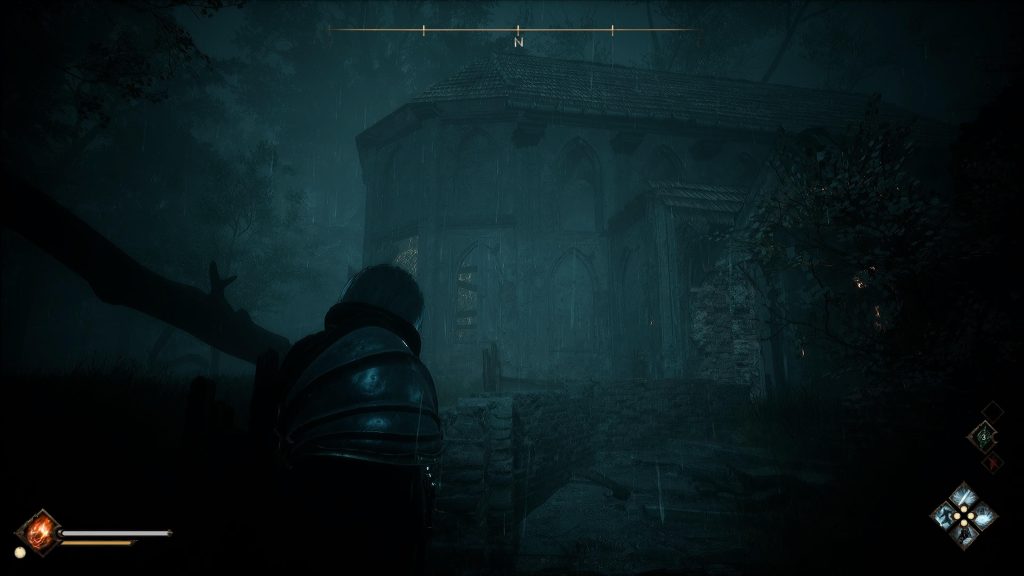
We believed that something players discover for themselves would remain with them for longer. The main journey remains clear, but players decide which traces to follow and which locations and bosses to discover along the way. Rather than simply following markers, we wanted players to learn about the world by observing its records, surroundings, and terrain.
Games in this genre are often filled with Easter eggs and references to other titles. Is there one that players might be surprised to discover?
We did not intentionally include any direct homages or hidden Easter eggs. However, many of the game’s stories began with Korean folktales and legends, and similar stories and emotions can be found in folklore from cultures around the world. Some players may therefore be reminded of stories that are familiar within their own cultural backgrounds.
The same story can be understood differently depending on a person’s life and experiences. Although these stories began in Korean traditions, we hoped the emotions within them could resonate with people beyond cultural and national boundaries.
From a technical perspective, did you create any proprietary technology specifically for The Relic: First Guardian?
We did not develop any particularly groundbreaking new technology. However, because we are a small studio working on a comparatively large project, we created a few internal tools to make parts of the production process more convenient. They were not extraordinary technologies, but simply practical tools we developed to support the work we needed to do.
What has been the most difficult aspect of development?
The most difficult part was deciding where to focus. As a small team creating a large-scale action RPG, we had to decide what we needed to preserve rather than trying to include everything. We focused on maintaining tense combat, the enjoyment of exploration, the stories of individual characters, and the flow that connects those stories to rewards and boss encounters.
Certain content sometimes has to be removed, edited, or censored because of regional laws and ratings requirements. Did you have to make any such changes?
We did not remove or significantly alter any of the game’s central stories or major content. However, we adjusted the names or details of a small number of items to meet regional ratings requirements. These were minor changes that did not affect the overall atmosphere or narrative.
The Relic: First Guardian is receiving a physical release at a time when physical games have become a contentious subject. Why did you choose to release the game physically rather than going entirely digital?
The Relic: First Guardian is our first game. We wanted it to exist not only digitally, but also in a physical form that people could hold and keep. It means a great deal to us, and we hope it will also become something special for the players who have waited for the game.
Will both physical editions include a disc in the box, or will they contain download codes?
The game will be on disc, and as a reward for box purchasers, we will also be adding some cool items to the physical box, including:
- Physical Map of Arsilthus: Chart your journey across a vast, forgotten realm with a premium real-world map of Arsilthus.
- The Night of the Unextinguished Flame DLC:
- Conquer a Brutal Bonus Dungeon: Descend into the haunting depths of the Sanctuary of the Forgotten Light – a perilous bonus dungeon featuring a haunting new boss and a punishing new challenge.
- Unlock Legendary Artifacts: Claim the ancient Sealstone of the Undying Ember Relic to empower your build, equip the imposing Armor of the Unextinguished Vigil, and wield its matching Sword & Shield – formidable rewards that will power your Guardian throughout your entire journey.
- The Black Banquet DLC:
- Physical Edition Bonus Pack: Claim a weapon and armour set forged to give your Guardian a lethal edge from the moment your journey begins.
The two DLCs will be delivered via a code in the box.
What do you think about PlayStation moving away from disc-based releases in 2028?
I believe the growth of the digital market is a natural development. However, physical editions still have the unique value of allowing people to own a tangible copy of a work they love. Rather than believing that one format is the only correct answer, I hope players will continue to be able to choose the format that best suits their preferences and circumstances.
Has AI been used during the development of The Relic: First Guardian, and are any AI-assisted assets present in the final build?
Project Cloud Games is a small studio that has been working on The Relic: First Guardian for many years. There is no AI used in the final game; however, in the early design stages, AI was used in a very few areas to help in the concept stage of development. This involved a few pieces of concept art for loading screens and a handful of icon images for the consumables.
Although there may be one or two elements of this AI still in the preview build, the final product will not have any of this AI work in the game. AI was also used in the early stage to help localise text, although all text was then manually reviewed and edited by Project Cloud Staff and no AI was used in the game’s voice-overs.
What do you hope players take away from The Relic: First Guardian?
I hope players will remember exploring Arsilthus, glimpsing another person’s life and emotions, and eventually coming face-to-face with the conclusion of that story. As our slogan says, “Everything remains as a story.” I hope those words will remain with players as well.
What is next for the team once the game releases? A sequel, a new IP, or DLC?
We do not see release as the end of development. We continued improving countless details right up to the final stages of development, and after release, we plan to keep refining and developing The Relic: First Guardian while listening to player feedback.
For the time being, we intend to focus on that rather than discussing new projects. Above all, we hope The Relic: First Guardian will not be the end of Project Cloud Games, but the beginning of showing players the kind of games we want to create in the future.
Is there anything else you would like to share that you are not usually asked about, or do not often have the opportunity to discuss?
More than anything, I would like to thank everyone who has followed and supported us. The Relic: First Guardian is our first game, and every member of our small team has put a great deal of themselves into creating it.
We hope players will explore Arsilthus at their own pace and discover a story that stays with them long after their journey has ended.
What do you make of In-hyeok Park’s comments? Are you excited for The Relic: First Guardian? Let us know in the comments below!
For your next read, check out our interview with Dinoblade creator, or the surprising sequel news to one of 2025’s best Soulslikes.

Luke Addison is the Founder and Editor-in-Chief of Thumb Wars. Having previously been a part of multiple outlets over the years, including building an entire gaming team from nothing to something, he thought it best to forge his own path and answer only to himself. As likely to be found playing the latest game as he is in the kitchen relaxing (by cooking), he always brings the same bold and brash attitude to everything he does, with a heavy leaning on sarcasm and dry wit!