Last Updated on Aug 31, 2026 @ 15:56:13 PM.
Resonance: A Plague Tale Legacy is here. Nearly four years after the last release in the franchise, A Plague Tale: Requiem, we now have the next instalment, and now, a pivot away from Hugo and Amicia towards Sophia. While not a new character and her story is not a continuation of the overall franchise, but a prequel, and her origin story as it were. What happened to her? How did she come to be? Why is she the way she is when we meet her in Requiem? All that and much more is answered in Resonance: A Plague Tale Legacy.
The previous game, Requiem, ended with Hugo unfortunately dying, and the duo seemingly having beaten the Macula. Amicia plans to find the next carrier of it, to avoid another re-emergence, and Sophia looks to help her. That’s where we left off, but Sophia was quite the mysterious character then, and this title fills in so many gaps, showing us who she is and why she’s that way. Plus, she may have more experience of supernatural black stuff than she originally let on.
One click and you're done. Thank you!
Environments, Exploration and Puzzles
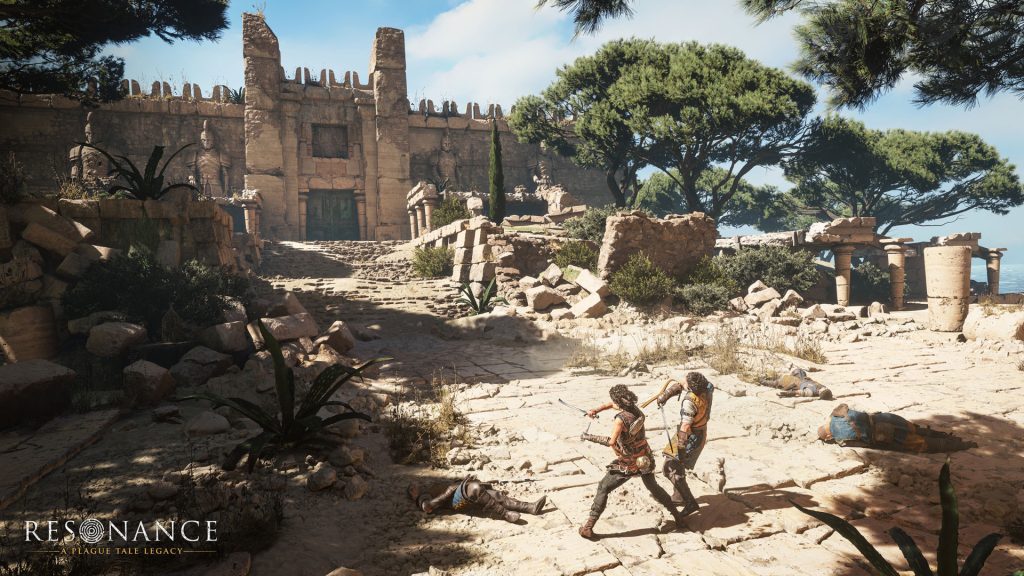
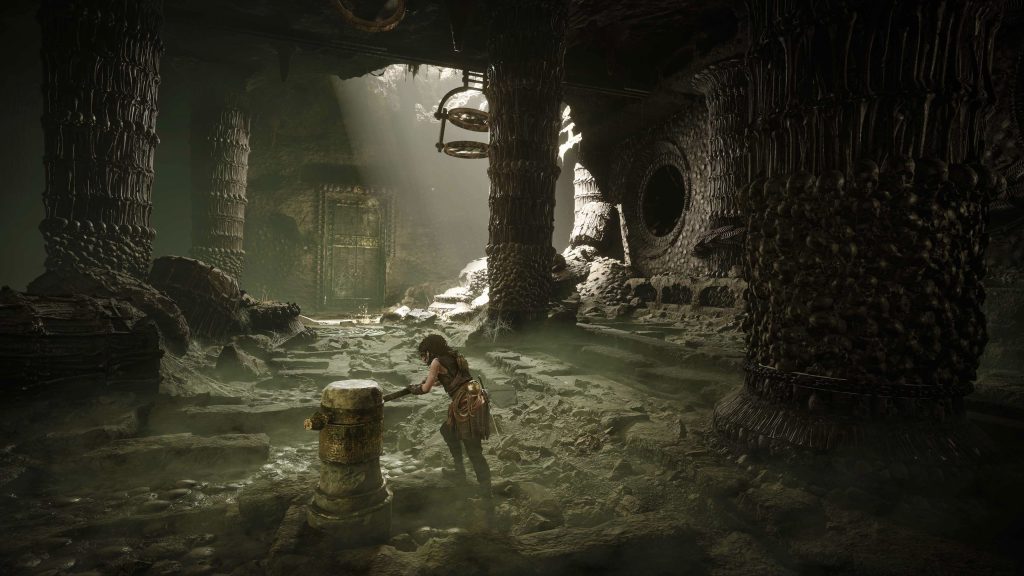
Front-and-center this time, Sophia and her tale continues the franchise’s pattern of having outstanding beautiful environments. The whole game is a feast for the eyes. Whether you’re exploring a Mediterranean beach filled with wreckage, stone ruins and the bodies of soldiers, or a dank dungeon covered in twisted supernatural growths, it’s always beautiful.
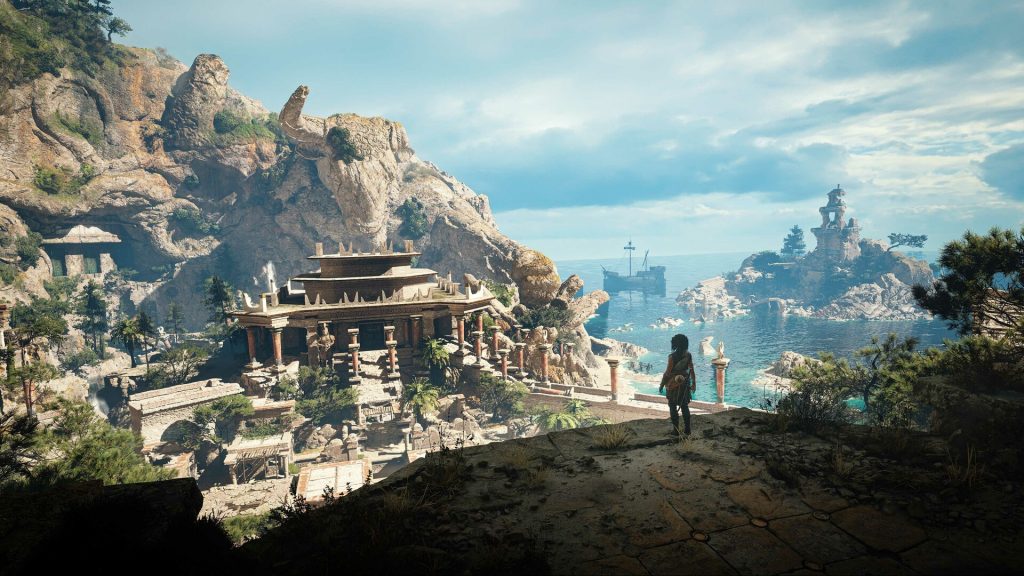
There are times where I could have forgotten I was playing a video game, with a beautiful sunset in the background happening whilst I desperately needed every ray of light. There were times where I was so oppressed by the near-constant Macula growth everywhere, I was glad to emerge into a grass field, or sun-bleached vista. I cannot say it enough, you will not get sick of seeing any part of this game. It’s gorgeous, even when it’s truly ugly.
Whereas the previous titles were tighter, more confined adventures, Asobo Studio have pushed the boat out here. There’s some rooms and areas that are gigantic in nature. Hundreds of meters across, and seemingly forever on-going below. There’s still the same claustrophobic environments that’ll make you hold your breath, but also the new expansive ones that are also all functional. How they made these is beyond me.
There’s an early chapter, maybe four or five, where you’re working your way around a huge statue and you can see the winding path circle downwards. What’s more impressive that as well as that, there’s also massive offshoots you’re forced down to, as well as puzzle rooms you have to complete to progress. Of course, there are moments where anyone that knows game development can tell it’s a hidden loading screen, but to be able to seamlessly tie these massive environments together is a technical achievement of itself.
Talking of puzzles, this is another huge improvement over previous titles. You’ll unlock the handheld Minoan artifact, a Light Sphere that is as equally useful during combat (in the latter chapters), as it is as a puzzle solving device. As the game goes on, you’ll use it in different ways. From hitting three switches in a specific colour pattern, to illuminating hidden paths and symbols, you won’t be able to get far without it, and it made me constantly think outside the box. If I couldn’t make the light work from one angle or position, I’d need to move, or maybe this wasn’t the solution. Either way, it felt novel compared to ‘physical’ puzzles most games go for. The lack of levers needed to progress was pleasant, and the game always came back around to its light vs darkness themes, even in practical puzzle solving progression. It’s a mechanic I think the studio deserves some real plaudits for.
Combat is a Must
The biggest deviation to the previous Plague Tale formula is undoubtedly the combat. Before, you’d stealthily crawl through high grass and around broken down wooden carts, before using Amicia to launch a stone at an unsuspecting knight’s head, or maybe extinguish some light to allow the Macula Rats to attack on your behalf. Everything was very much without your own agency, but that’s all gone now. Sophia is a master with dual blades. One sword, one dagger, all purpose and practice. She’s not some well-to-do teenager with no real life experience like Amicia and Hugo, no, she’s a dirt-covered, hard-life, raised-by-smugglers woman that can absolutely destroy anything and anyone in her path, and the gameplay is better for it.
Combat is varied without being overwhelming. You have your two weapons, which can be used to hack and slash, as well as for a charge up attack; you can use your grappling hook to pull enemies towards you a la Batman; you can pick up dropped items to throw at enemies; kick them; block, parry and dodge attacks; and use the environment to your advantage. This varied approach means combat feels different from encounter to encounter, but can be mastered quickly. The AI is another matter though. Like many other games before it, Resonance: A Plague Tale suffers from having a crowd of enemies that stand around and wait their turn to attack, even on the higher difficulties. It’s a minor gripe, but an immersion-breaking one.
By the end of the game, even with the higher difficulty enemies taking over compared to the weaker, easily dispensed ones, I’d still gotten to grips with the combat system that I felt like I’d grown alongside Sophia’s skills. It’s a big positive to the combat system that it feels so intuitive, but also a clear inspiration to many games that used the same basis that came before it.
Beyond basic combat, you’ll have the opportunity to upgrade Sophia as you go. Picking up and earning Resonance Points as you get further through the story will give you access to a number of skills, and after you’ve unlocked those, attached Mastery Skills. For example, you can unlock the ability to redirect enemies as they attack, which works in much the same way as a throw, but watching them tumble into their mates never gets boring. Or you can buy another skill that’ll allow you to running dropkick enemies, which made me feel like a wrestler from WWE, especially when they ended up falling over the edge of a cliff.
The skills system isn’t massively detailed though, and I do feel like the majority of players will end up with a similar build as me come the end of their own journeys, with some skills being infinitely more advantageous than others, at least in my opinion and experience.
In your exploration, as well as Resonance Points, you’ll find all manner of items that can help. You can find rings, bracelets and artefacts, some of which will boost you in various small ways. One such item allowed me to tank the final hit of a guaranteed death, allowing me to survive, and another granted the increased possibility of throwables being dropped in combat, which speaks for itself. Plus, they were all automatically worn by Sophia, which was a cool little touch. You’ll also have the opportunity to find any of eight swords in the game, each with different looks and bonuses too. I ended up maining a broken spear that gave me the ability to run and attack straight away. To say I relied on this in some of the harder fights is an understatement. When you get to it, be it for the lore, atmosphere or items, just take some time to explore. Don’t rush.
Graphics, Performance and Audio
As already mentioned, the visuals of Resonance: A Plague Tale Legacy are some of the best of this generation. The environmental design early in the game to mix both visual beauty and functional exploration and puzzle solving is second-to-none, and makes the adventure a genuine joy. After a point in the game it does focus heavily on the dreary, claustrophobic and oppressive environments of underground areas and ruins destroyed by the Macula growth, but it’s for good reasons, and fits both the themes of the story, and the story itself at that point. You won’t get sick of what you’re looking at.
Equally, if not excelling the visuals, is the audio. I cannot stress enough how much I loved the score from composer Olivier Deriviere, who scored the first two in the trilogy and has a firm handle on what the universe wants and needs at what particular moment. It’s probably my favourite facet of the title, with the OST effortlessly pulling the strings of my emotions at the time. Excitement, heartbreak, relief, tension and everything in between can be found in the sounds Deriviere has composed, and matched with the brilliant performances from Anna Demetriou (Sophia) and co, it’s hard not to get drawn into the story and feel the plight of the characters, even the ones you grow to hate.
Despite everything I’ve said above, you might expect the game to run terribly. I’m glad to say it couldn’t be more the other way. Whether intensive combat scenes, huge areas being rendered at the same time, a constantly moving and evolving Macula prowling the shadows around you, or anything else the game throws at you, there was not one instance of frame rate drops, any sort of stutter, zero crashes, and no pop-in of assets. It’s hard to not be impressed with how it runs, with what it manages as a whole.
There’s a lot to be happy with in Resonance: A Plague Tale Legacy. The story is hard-hitting, and gives context to not only Sophia’s origins, but also the universe as a whole. The combat makes the game more accessible to many that weren’t a fan of the slow, methodical approach of the other two, and, as mentioned, it’s a tour de force in graphics and audio.
It does, however, overstay it’s welcome and could have been a little shorter, and the story, while emotional at times, telegraphed itself far too often. Being a prequel there’s also very little stakes for the main character, but that’s a narrative issue across all prequels. It does the bare minimum of pushing the overall franchise forward, and does leave us wondering what is next, but I personally put this in second behind Requiem, and ahead of Innocence. It’s good, it needs to be played by fans and non-fans of the franchise alike, but equally, it may alienate fans while not doing enough to entice new fans to stay past this title.
Resonance: A Plague Tale Legacy
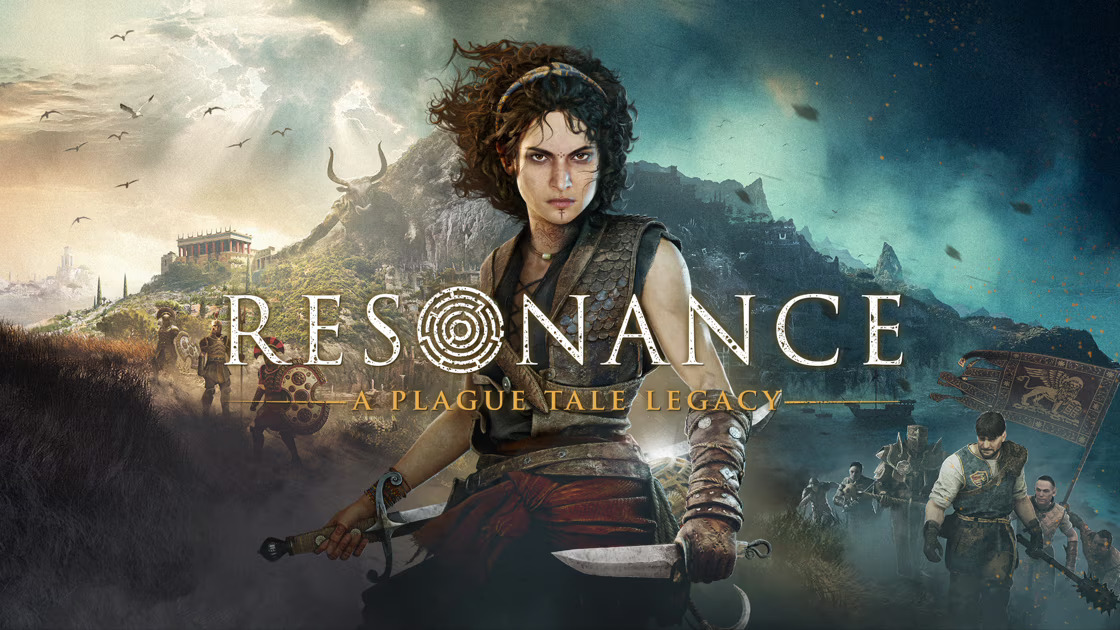
Embark on an original story, prequel to the award-winning games: A Plague Tale. As Sophia, journey to the Minotaur’s Island, outsmart deadly foes, unravel ancient secrets, and confront a mythical creature at the heart of a devastating curse.
Summary
Resonance: A Plague Tale Legacy is a big step up for the franchise in a lot of ways. It’s better in the puzzle and exploration department, with beautiful areas designed to perfection. The combat is a new addition that makes it more fast-paced compared to previous titles, and the audio is top notch. Seriously, I can’t shut up about it. The story does pull at the heart strings whilst also expanding everything we thought we knew about the universe, but is maybe a chapter or two too long. It’s not the best in the franchise, but it’s close to the complete package.
- Audio and visual wise, it's incredible. Pushes the envelope for the franchise.
- The new combat is true to Sophia's character and alleviates the slowness of the previous titles.
- The atmosphere and 'feeling' as you play will keep you moving forward..
- Overstays its welcome a chapter or two.
Resonance: A Plague Tale Legacy is out on 27th August for PlayStation 5, XBOX Series X|S, and PC.
For your next read, don’t miss our review of Mortal Shell 2, or our review of The Mound: Omen of Cthulhu.
Thumb Wars reviews every game based upon the structure of our review policy, and every review is on OpenCritic.

Luke Addison is the Founder and Editor-in-Chief of Thumb Wars. Having previously been a part of multiple outlets over the years, including building an entire gaming team from nothing to something, he thought it best to forge his own path and answer only to himself. As likely to be found playing the latest game as he is in the kitchen relaxing (by cooking), he always brings the same bold and brash attitude to everything he does, with a heavy leaning on sarcasm and dry wit!