Last Updated on Jan 14, 2026 @ 16:34:10 PM.
Before Obsidian Moon‘s demo was released during Steam’s Detective Fest, I was granted the opportunity to try Obsidian Moon‘s demo early and try out the game’s first case and its various mechanics. During my time with the demo, I did my best to try out all the different mechanics that are included within the game, and I even attempted to 100% complete the first case, so not just solving the case, but also gathering every clue.
Although the main aspect of this demo is to showcase the game’s different mechanics and systems that are utilized throughout its gameplay, a small portion of the game’s story is also revealed, allowing gamers to see the text-based story and get a small glimpse into what they will be experiencing through Obsidian Moon.
One click and you're done. Thank you!
Obsidian Moon Has Plenty of Mechanics to Learn and Master in a Short Window of Time
Jumping right in, the first thing I will talk about is the gameplay within Obsidian Moon, as this is something that is showcased the most during the game’s demo, as players can do one tutorial case and an official case within the demo itself.
Throughout these two cases, players are able to do everything that the game has to offer as they explore the various mechanics that are possible within Obsidian Moon. Whether it be investigating a crime scene for clues, talking to witnesses, threatening witnesses with a gun to get more information, or even sending evidence off to the lab, players are able to do all kinds of things to figure out what has happened and why.
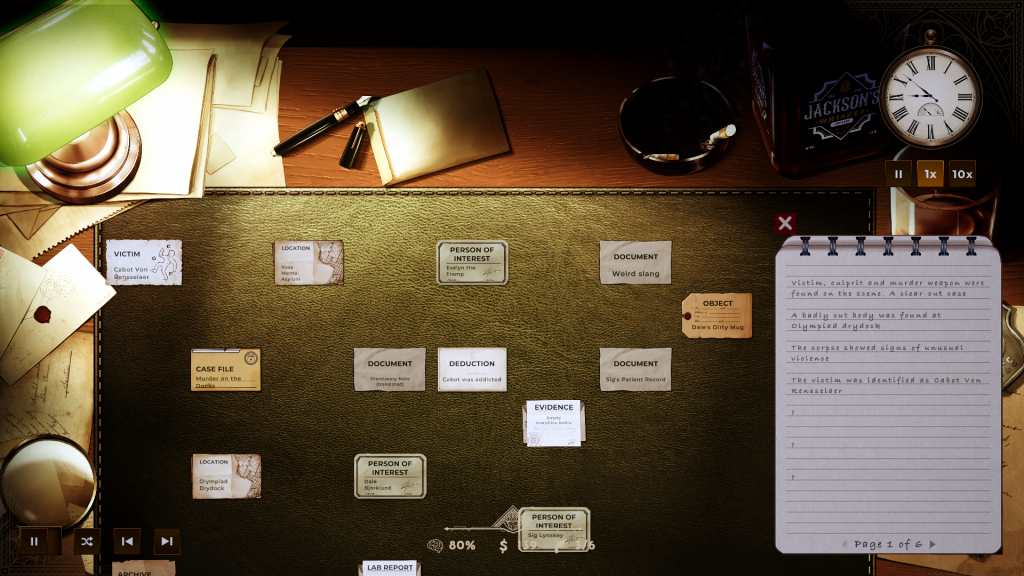
Due to Obsidian Moon being a text-based adventure, players are not actually walking around the crime scene but are, in fact, looking over notes that are gathered and written down, forming a murder board of sorts that grows with every new clue that is discovered. This effectively feels as though the player is inside the mind of a detective, allowing them to see how these clues correlate to each other or even how these clues have no connection at all.
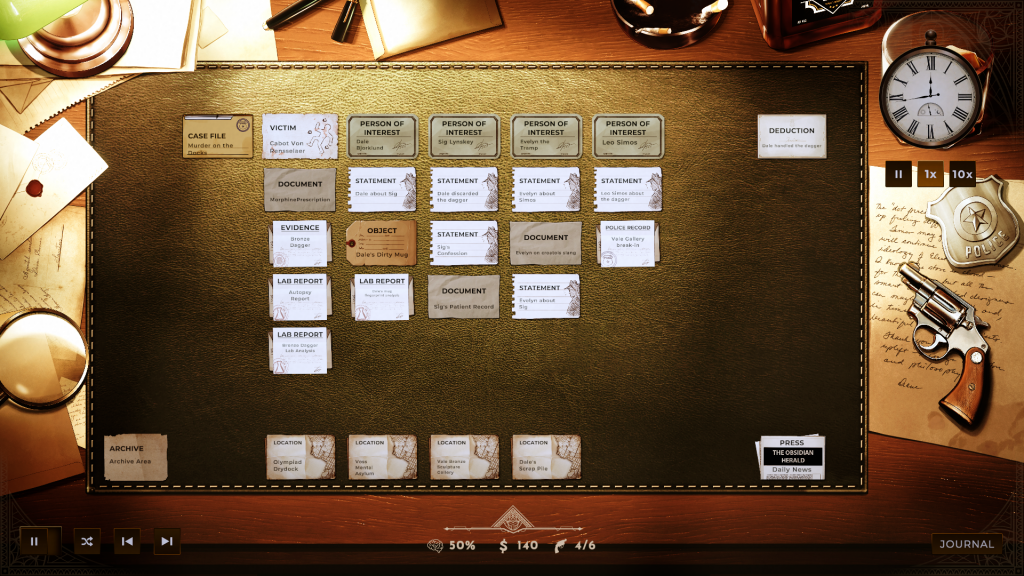
As the player moves through the cases that are currently active in the demo, they will be tasked with finding out who committed certain murders to place them under arrest. To do this, players will need to find certain evidence, such as the murderer, the murder weapon, the location where it took place, and even a motive, so this means players need all the evidence they can muster.
On the surface, this may seem like an easy task, but when it comes to Obsidian Moon, you are playing against the clock, as each action requires time. Even though you are able to pause time in the game to allow you time to think, if you are looking for new clues or information, you are required to spend time looking for answers, which adds a whole new challenge.
The longer you take to solve the mystery, the harder it is for your detective services to stay afloat, as you are required to spend money on keeping your agency active. This takes the form of bills that you pay each day, so whether you pay for the electricity to keep the lights on, pay for better equipment for the lab to speed up testing, or even buy whiskey to keep your sanity up, and yes, there is a sanity bar – there are numerous costs that you need to be wary of.
Obsidian Moon’s Story Makes us Feel as Though we are Actually in the Mind of a Noir Detective
As stated above, Obsidian Moon‘s story isn’t overly shown during its demo, as only the early stages of the game are on display within this demo; however, gamers are able to get a good glimpse into how the story of this game is showcased with its text-based format and the various conversations that take place between the various characters involved.
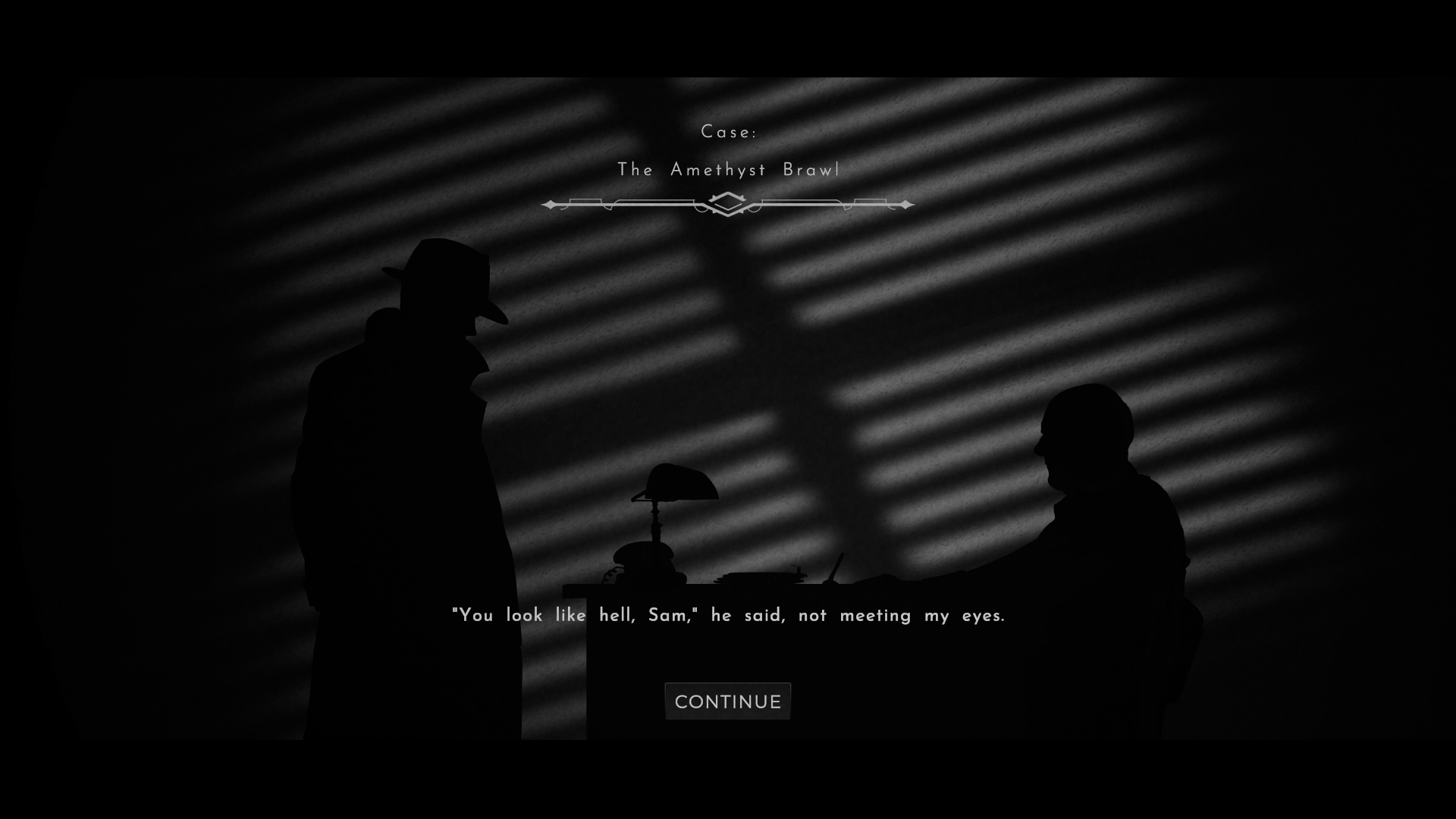
To add to the atmosphere, the game recommends that gamers play in the noir mode that provides a monochrome style to the game, and it is even recommended that you play within a dimly lit room to add to the atmosphere, and after playing the demo, I can agree that this recommendation is well warranted and adds to the experience of playing as a noir detective.
Throughout the demo, the player is constantly made aware of what the main character’s thoughts are about certain moments and conversations that take place throughout the game, similar to how noir films use a sort of descriptive inner monologue to provide even more context to a situation than what we can see and read within the conversations.
This, to me, is a great addition to the game, as it feels like a real storybook in a sense by providing context to situations that we cannot see, similar to how books will describe a person’s appearance, their smell, their voice, and so much more, which again fits into the mindset of a noir detective and how they approach every day of their lives.
Due to only one main story case having been released, we cannot see the overall scope of the game’s story and if the cases connect to each other in certain ways, but what we can see is that completing this first case may have an impact for the future of the game depending on how you solve the case, showing again the world of a noir detective and how everything can be a resource and will likely help the player out in future cases.
For more Thumb Wars Gaming coverage, check out our interview with Dean Hall, the developer behind ICARUS and its console release, or check out our hands-on preview of the game Bandit Trap.

Liam is a Senior Editor, Writer, and Critic for Thumb Wars and has been working with the team since day one. Liam is a big fan of all things gaming, as you will catch him playing all of the new releases from every genre you can imagine. Whether you find Liam gaming just for fun or spending his free time streaming, you will always find a smile on his face when it comes to all things gaming.