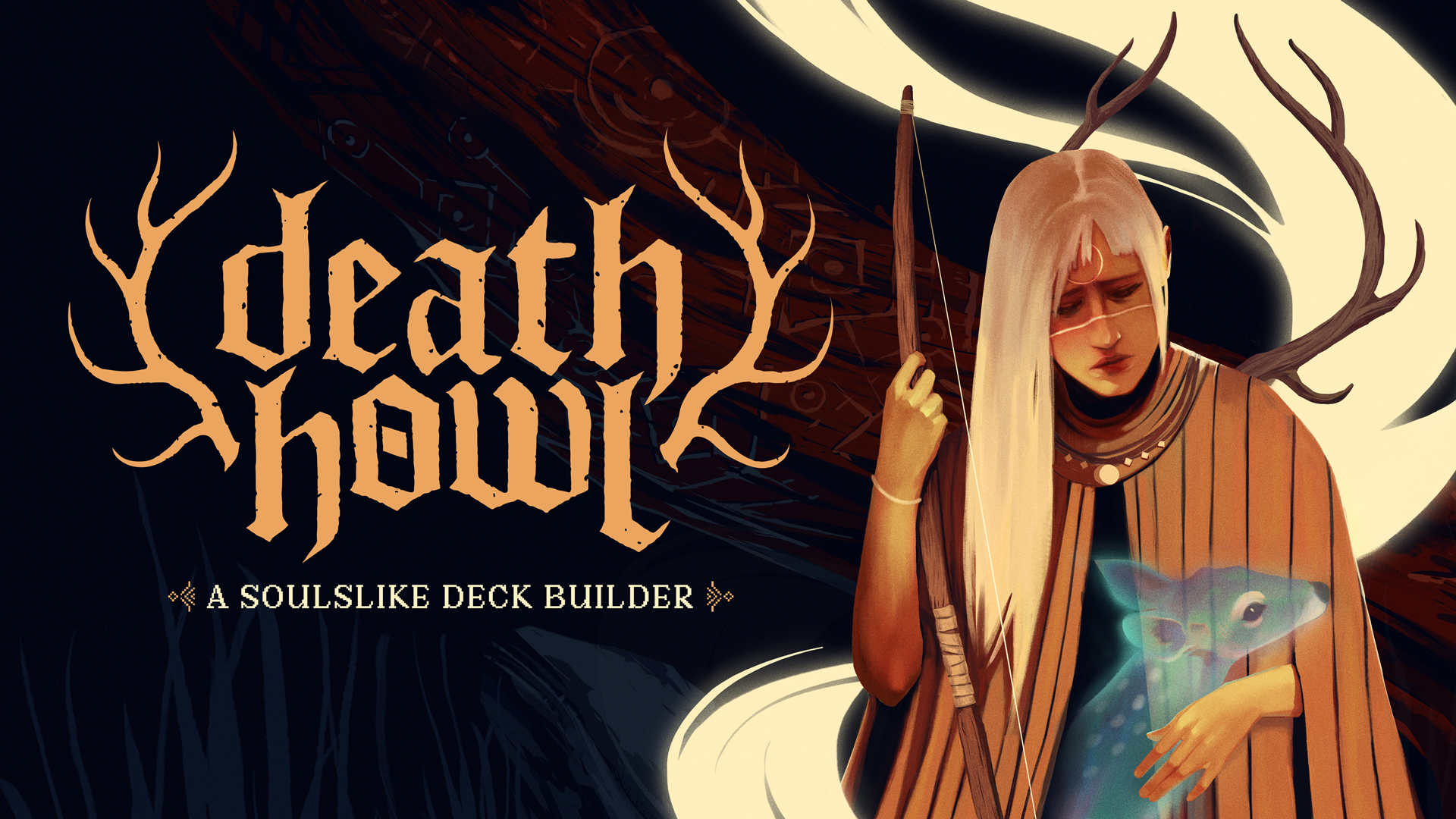
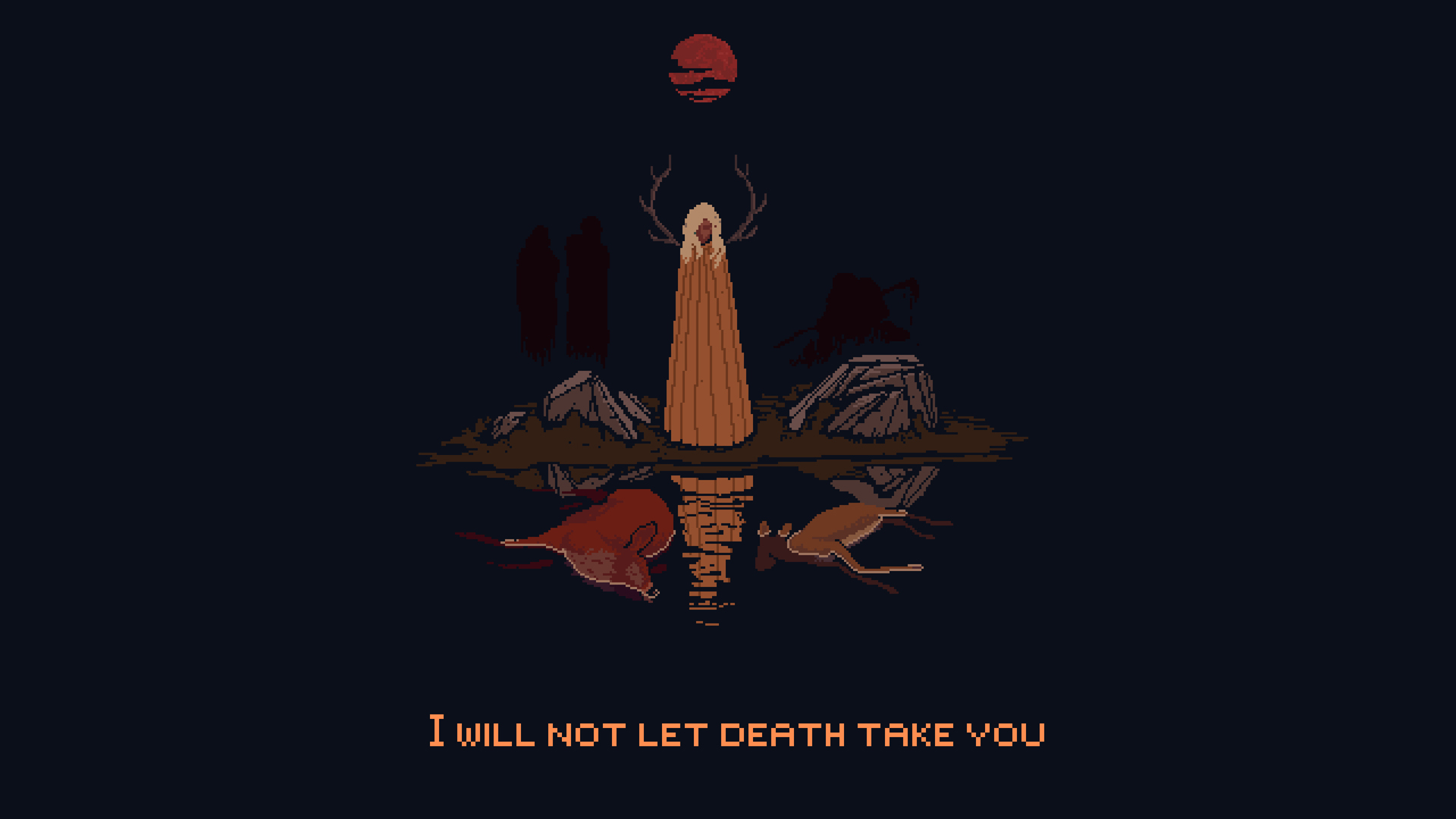
Death Howl is a new game from the developer The Outer Zone in which players will take control of a character known as Ro as they search for their son, who has recently passed away and joined the spirit world. However, Ro does not want to lose her child, so she begins an adventure in which she searches for a way to bring her child back to her.
During this adventure, players will depart on a dark adventure in which they will explore various locations spanning difficult biomes filled with all kinds of spirits that they have to battle in order to progress further in the game’s story. Within Death Howl, players will have to combine their deckbuilding skills with their ability to maneuver around a grid-based combat zone full of challenging but rewarding combat.
Along with this deckbuilding combat, players will also be challenged by the Soulslike mechanics that are present within Death Howl as they deal with the complications of limited health, limited attacks, and the requirement to heal at specific locations, respawning the enemies upon doing so.
Throughout my time with Death Howl, I experienced each of these mechanics and more as I explored the dark and dreary world within while dealing with the challenging combat. Within this review, I will discuss these different features and more, while also touching on the game’s story and how I felt during my playthrough.
The World of Death Howl is a Tableau of Beautiful and Gloomy Locations
One of the first things players will notice when they load into Death Howl is the amazingly unique world that the player will explore throughout their playthrough. Upon loading into the world of Death Howl, the first thing I saw after the initial intro was the first location I was able to explore, which was a forest filled with winding paths, rivers, and creatures both deadly and friendly roaming around.
A lot of the time I spent within Death Howl was just simply me exploring each nook and cranny within the various locations so that I could see all that I could see. As fun as this was, due to the gameplay mechanics at hand, this did become rather challenging to do, as I often found myself having to backtrack after a fight, especially if I was badly injured, so that I could progress further in my next attempt.
However, this did allow me to see the numerous random events that could take place within the game world, even if they were small events. What I mean by these small events is that while exploring, there would be instances in which small animals like squirrels would react to your presence and move out of your way, climb trees, and even gather nuts on the floor before scurrying away to the safety of a tree.

For me, this was a beautiful detail to include within Death Howl, showcasing how the world is alive and breathing while also providing a sense of innocence in a world of death and sorrow. Along with these amazing details, the overall world in Death Howl is incredible and breathtaking, while also having an atmosphere that feels very claustrophobic without losing the idea of freedom for the play.
In terms of the game world’s graphics, the only description I feel will provide the game justice is by describing it as a book come to life. The reason I am describing the game’s world like this is down to the way the art looks to have been created, as if it has been hand-drawn and crafted like a classic storybook.
Even the cards and the abilities the player will use within Death Howl share this same art style, as they look as if they are created out of parchment and placed onto the screen, while also having some incredible effects depending on the abilities being used.
The Combat of Death Howl is a Challenging Ordeal With Plenty of Cool Abilities and Mechanics to Use
The biggest part of Death Howl is the deckbuilding combat that players will use throughout their vast journey to save their child. Throughout Death Howl, players will have to be tactful regarding how they handle the different combat scenarios placed in front of them, as one simple error could be the difference between life and death.
The reason that I am describing Death Howl‘s combat as a challenging ordeal is simply down to the fact that there are a lot of different mechanics at play that each bring their own roadblocks into the game, but once they are combined, they begin to create a complicated but fun mashup of mechanics.
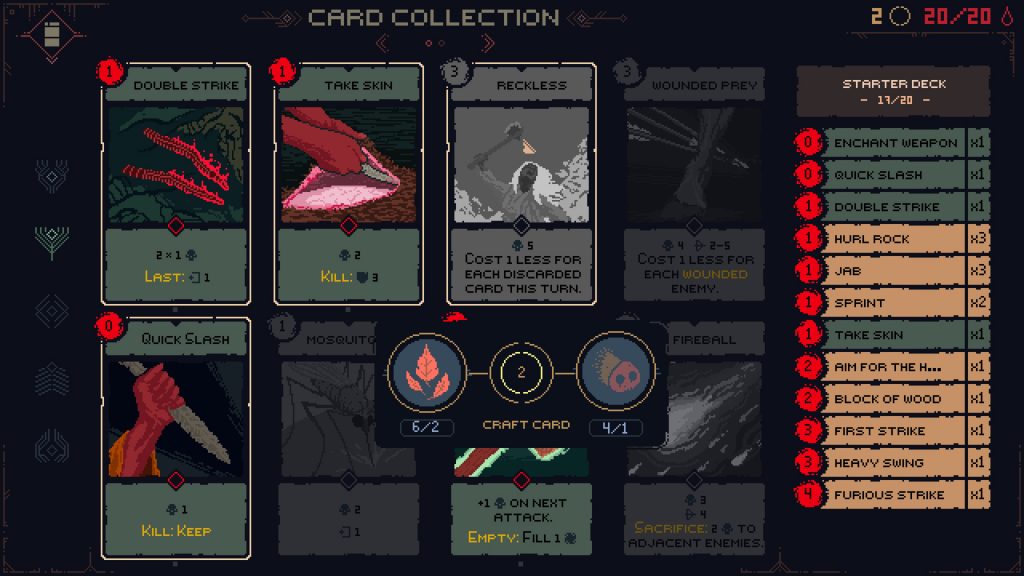
For instance, one of the main combat mechanics that the player will come across is the deckbuilding mechanic, as this is the core combat mechanic. This means that players are required to create a deck of cards that can help them through any challenge the game puts in front of them. Whether that be a lot of ranged combat to counter enemies from far away, shields to protect the player from damage, or even cards that gain buffs once other cards are sacrificed or used.
There are over 100 cards for the player to acquire in Death Howl that each aid the player in different ways, but that doesn’t mean that each card is perfect for every scenario. While I play deckbuilding games, I often find myself attempting to bring in a mix of cards that can help with any situation that could be thrown my way, which is something I found myself doing within Death Howl, and this did work during my playthrough.
However, the sheer variety of cards did allow me the opportunity to mix and match whenever I felt like it, ensuring that I could swap out cards while adventuring and creating unique decks that could either work or not work. For me, this was a fun mechanic, as I was able to try out different combinations and see how it would affect my battles, but that didn’t always save me from the enemies that lurked around each corner.
Even though I could build a strong deck to fight with in Death Howl, that didn’t mean that I would defeat every enemy with ease, as each combat encounter was a constant struggle between a single person against a horde of enemies who could easily crowd the player and make mincemeat out of their health bar.
During my playthrough, I found myself regularly learning the different attacks of the enemies within the game, as each enemy reacted differently to how I played and what cards I was using. For example, I do not want to talk about any enemies later in the game, so I will mention the warthog from the early sections of the game, which, on a surface level, wasn’t a very complicated enemy, but it does have a variety of attacks to choose from.
While fighting this enemy, I was constantly struggling to find a good balance early on regarding how to defeat it without losing too much health, as the enemy was able to use a few different attacks to slowly lower my health. The two main attacks I saw were a basic attack when the enemy was close, which only did around 3 damage, and a second attack in which the warthog could charge across a straight line, dealing 5 damage instead.
Due to these two abilities requiring different circumstances, just like the cards in my deck, I constantly found myself deciding between tough decisions depending on the cards in my hand. For instance, if I had a card in my hand that would push the warthog back while dealing damage, I had to decide whether or not I could close the gap between the enemy before my turn ended, or if I couldn’t, would the damage I dealt be worth the damage that would be done to me.
For me, this is exactly what a deckbuilder such as Death Howl should be like, as each combat encounter tasked me with learning my enemy’s attack patterns while also encouraging the idea of ensuring that the enemy cannot use its strongest attacks while also minimizing the damage they could do, if any at all, through positioning, which in Death Howl wasn’t an easy task.
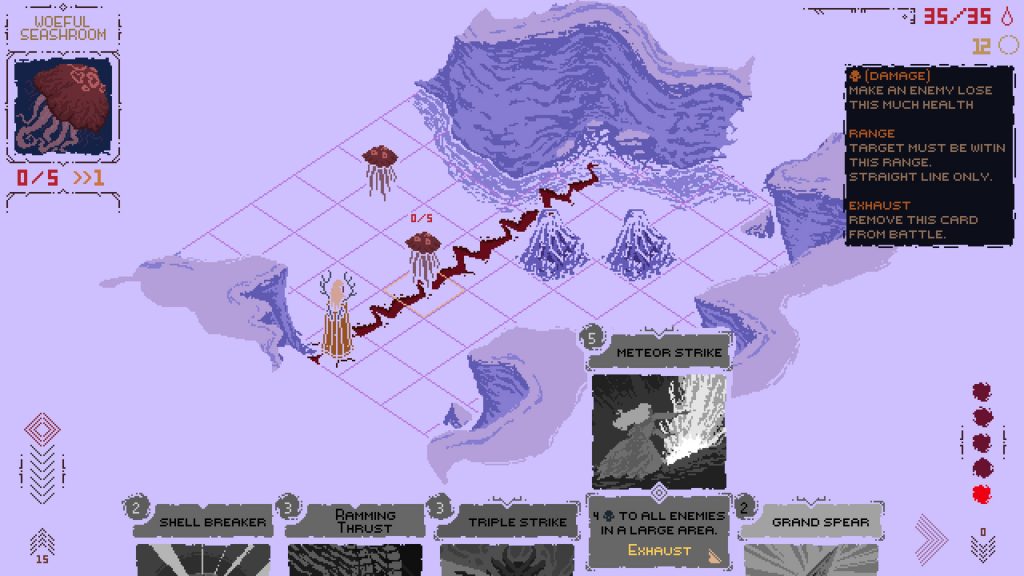
The reason positioning was such a challenge in Death Howl was down to the grid-based system that was in play, as I was limited to moving onto certain places within a combat area, attacking within certain spaces, and even ensuring the enemies couldn’t attack me with ranged attacks or close-quarter attacks.
Even though there are cards that can help provide movement to the player, it is very hard to find a guaranteed way to stay safe within combat, which is understandably intentional, as there is no way to protect yourself from every angle due to the grid-based system and the limited movement the player is inhibited with.
Along with being a challenge against normal enemies that outnumber the player, the grid-based system provides an even bigger challenge once bosses enter the fray, as the grid grows even smaller with less space to move, but with bigger opponents to fight that can quite easily overwhelm the player with sheer devastating power.
All that being said, for me as someone who loves a challenge, all of these systems combined are incredibly fun to play around with, as they create one of the most intriguing gameplay loops I have seen in a very long time, while also providing me with the opportunity to spread my wings, in a sense, and try different things in order to overcome challenges.
Death Howl’s Story is One of a Kind, Starting Dark and Gets Darker
As stated at the start of this review, Death Howl‘s story follows the character Ro as she travels around various locations as they look to retrieve their child’s soul from the spirit realm so that they can bring them back to the real world and reunite with them. As always, I will avoid spoiling the overall arc of the game’s story, but I will touch on the tone of the game’s story and how it impacted me during my time with it.
First of all, it is safe to say that any game revolving around the idea of death and coming to terms with death is a dark and sad experience that will understandably leaving gamers with a sense of dread and despair long after completing the game, but the way Death Howl handles these topics is very well done with plenty of care and tenderness to ensure that player doesn’t feel too overwhelmed or distraught by these situations.
In a lot of games that follow these themes, it is often used as a method to instill fear in the player or to make them feel uncomfortable in a sense, but Death Howl in my opinion moves in the opposite direction focusing more on the idea of coming to terms with death and how doing so makes people feel.
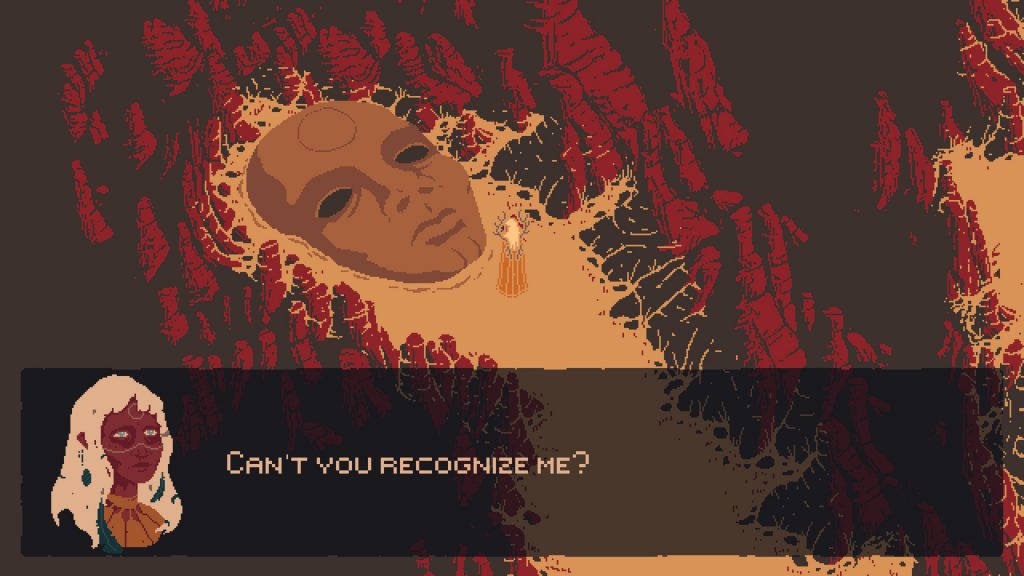
Although the story was following a rather dark tale, it wasn’t overly complicated, putting me in a situation in which I was lost or confused, but instead was rather simple to understand, ensuring that I was able to keep up with the story without fearing that I had missed something or misunderstood a situation.
Along with the main story, the player is even able to take on various side quests to help spirits within the world of Death Howl, which provides an even deeper understanding of the world that Ro resides in, while also seeing how the different spirits can help or hinder their journey.
A lot of these side quests were quite interesting as they weren’t too similar and tasked the player with all kinds of objectives that took them throughout the game world, while ensuring that they didn’t surpass the game’s main story, overshadowing it and making players focus too much on the side content rather than the main event.
Overall, I found that the game’s story and even side quests were a lot of fun, even in their darkest moments, as they were able to grip me and my emotions, keeping me attached to the main character and the plight they are going through, while also feeling a sense of dread for every character I encountered.
Death Howl
Summary
Overall, I found Death Howl to be a fun and dark experience that created an exciting mix of challenging combat with an intriguing deckbuilding mechanic that provided me with the freedom to create my own decks, while also creating various challenges in which to try them out.
The world of Death Howl was a mix of gloomy but beautiful landscapes that I just couldn’t help but enjoy as each new location felt like a breath of fresh air, while also feeling like there was a threat around each corner.
In terms of the game’s story, I found it to be a very haunting experience that stuck with me long after I finished playing, while also being fun regarding the game’s side missions and characters I could meet along the journey.
HOURS PLAYED: 20
PLAYED ON: PC
- The world is very detailed with beautiful landscapes that are fun to explore.
- The combat was a lot of fun with all kinds of unique deckbuilds and challenging soulslike mechanics.
- The story albeit dark, was fun to experience while it also left a lasting impression on me.
- A lot of the different mechanics were hard to grasp at the beginning leaving me lost with the task of having to learn through trial by fire.
For more Thumb Wars Gaming coverage, check out our hands-on preview of Bandit Trap, or check out the recent trailer for the upcoming game Silent Road.

Liam is a Senior Editor, Writer, and Critic for Thumb Wars and has been working with the team since day one. Liam is a big fan of all things gaming, as you will catch him playing all of the new releases from every genre you can imagine. Whether you find Liam gaming just for fun or spending his free time streaming, you will always find a smile on his face when it comes to all things gaming.