One click and you're done. Thank you!
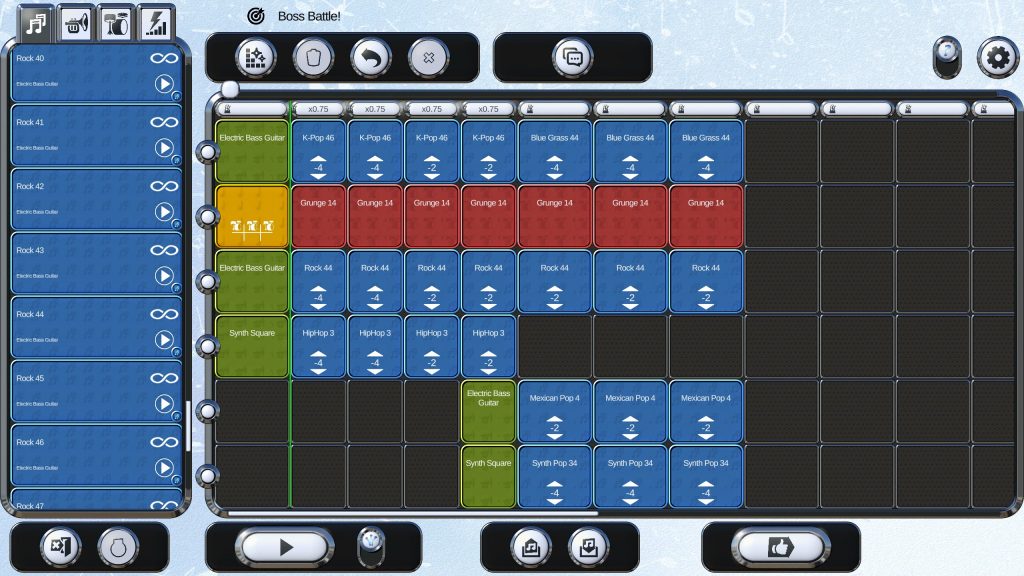
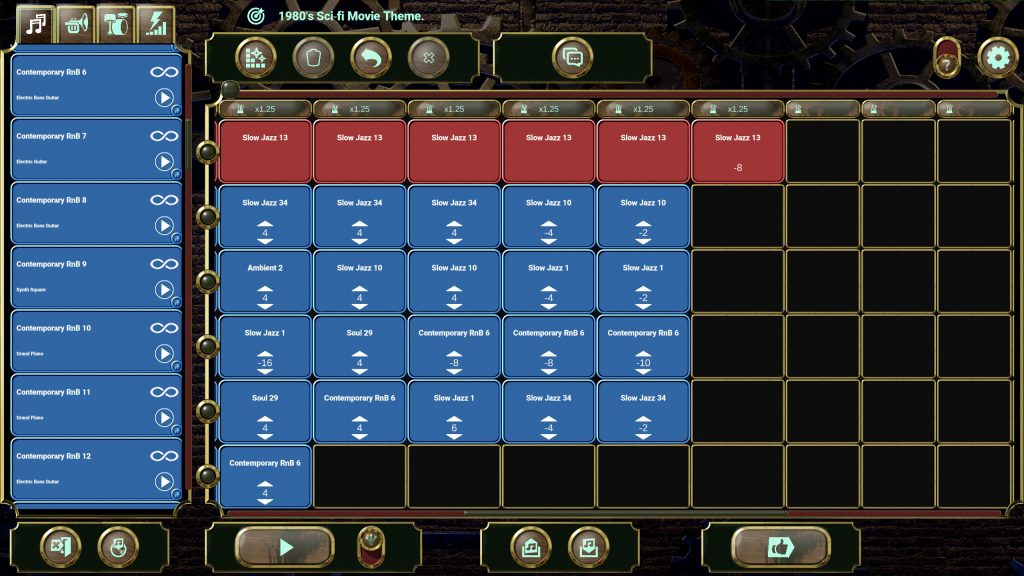
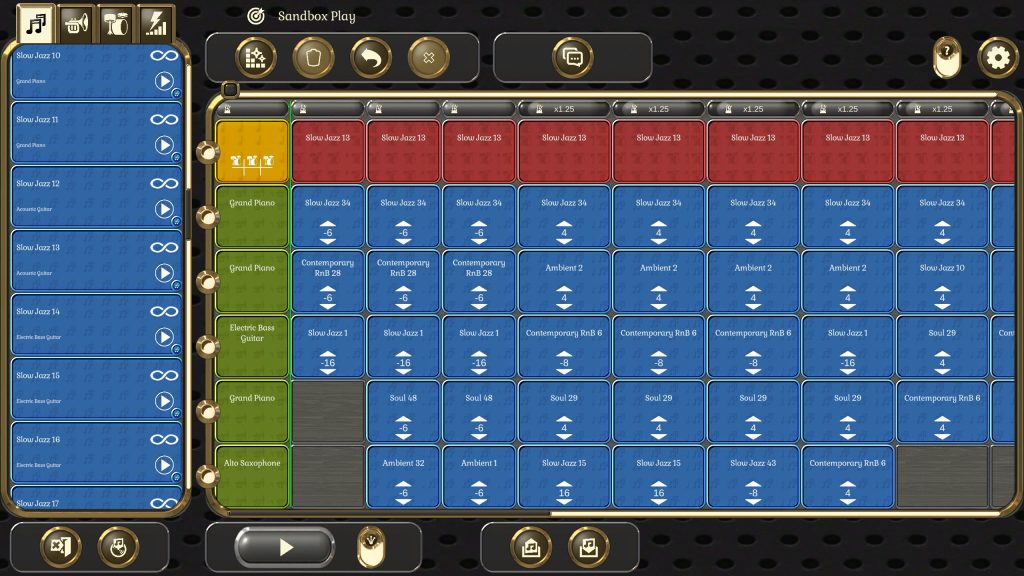
We recently had the opportunity to talk to industry veteran Jake Simpson regarding the upcoming game Lassen’s Loop, which has been created in honor of his late friend Justin Lassen and comes from his new studio TNB Games. Lassen’s Loop allows players to create music using 8-second clip cards of different songs and instruments. Throughout the game, players are able to let their creativity fly as they create their own music, or they can compete in challenges to see who can create the best song with limited resources.
During this interview with Jake Simpson, we talked about a few different topics, whether it be Lassen’s Loop gameplay and how it was created by the team at TNB Games; Jake Simpson’s past development work in the gaming industry; how creating Lassen’s Loop in honor of Justin Lassen felt for Jake; and even future content for the game and plans for TNB Games as a whole.
Thank you for taking the time to answer our questions. For our readers who may not know you, can you tell us your name, your role within Lassen’s Loop, and your history within the gaming industry?
Hi Liam! Thanks for having me. I’m Jake Simpson, founder of TNB Games and the developer behind Lassen’s Loop. I’ve spent over four decades in the games industry working on titles like NBA Jam, Star Wars Jedi Knight II: Jedi Outcast, The Sims 2, and Age of Empires II: Definitive Edition.
Can you tell us what inspired you to create Lassen’s Loop in the first place?
Well, that’s a big question! Originally, TNB was creating a sort of framework inside of Unity; something that could handle turn-based card games, and Lassen’s Loop just came out of that naturally. I’m a musical ignoramus (as our trailer makes clear), and wanted something that could allow me to make music with no prior musical notation knowledge or ability to play an instrument.
Cards featuring 8 seconds of music that you can mix and match on tracks with other cards seemed to fit the bill. We couldn’t find anyone else doing this, apart from a VR product that had been withdrawn, so we thought, “How hard can it be?”
Turns out pretty hard, all things considered. There’s a lot more to making a game for four platforms at once, and getting it working on all of them, than we expected. Shipping with 14 languages was also quite a reach.
The phrase, “We do this not because it is easy, but because we thought it would be easy,” is very appropriate right now. 🙂
Along with creating Lassen’s Loop it is also dedicated to your late friend Justin Lassen, can you tell us how it felt to create this game in their honour?
Justin would have been all over this kind of thing. He was extremely technical, and he loved technical means of making music. He used to create patches for lots of the synthesizer manufacturers, and he always had some new synth that hadn’t been released yet around his place. (A “patch” is basically a pre-defined instrument you can select on a synthesizer. While synths let you create your own instruments, most also come with pre-defined ones on board.)
Justin would often play a track for me from a well-known band and say proudly, “That’s my patch they are using!” It’s so nice to be able to use this as a tribute to him. His family have been nothing but kind and gracious to us, and we’ve been including them throughout development of this game.
This game is your tribute to your good friend Justin Lassen. Which of his tracks would you suggest someone listen to, if they could only listen to one?
I would suggest anything from the White Rabbit album.
Although, a personal favorite is The Prophecy, on the Lord Retro album.
When creating Lassen’s Loop you have ensured that its process of creating music is as simple as can be. Can you tell us what challenges there were in creating this process as well as the benefits you feel it will provide to casual music lovers?
Well, there are restrictions to this. While you can pitch-shift an individual card’s 8 seconds and change the length of each card, it’s all fairly fixed at 4/4 time, so everything can play together.
Pitch-shifting a whole card is useful, but sometimes you just want to move a single note’s pitch, and right now that’s not possible. Perhaps Lassen’s Loop 2? The other thing is that the instruments we ship are large in terms of storage. I wish I could make them smaller, but we wanted quality, so…
But for non-musical creators, here’s the appeal: you can sit on a train or a bus, put your headphones on (not using headphones while watching videos or playing games in public should honestly be a crime, by the way; also, stay off my grass, slow down, etc.), and just drag cards around. Making music that way is just… well, it’s cool. I get my family to drive everywhere now so I can sit in the back and mess about.
To those that are interested in the concept, but don’t necessarily have the musical ability to match that interest, what would you say to them?
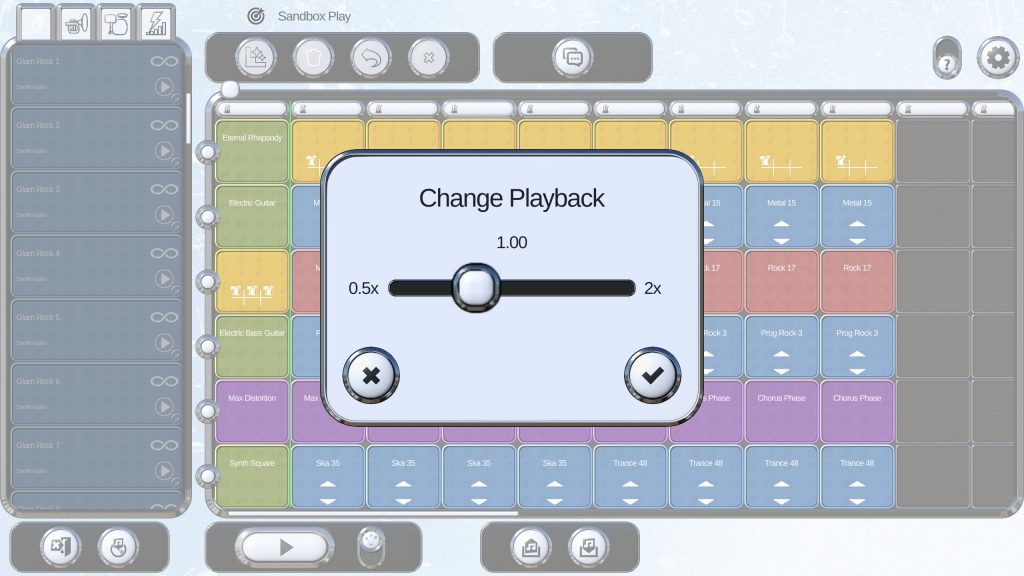
Well, it doesn’t take much to create something in Lassen’s Loop. You just have to try. Download the demo, create an account (so you get some free cards), and start dragging cards around to see what happens!
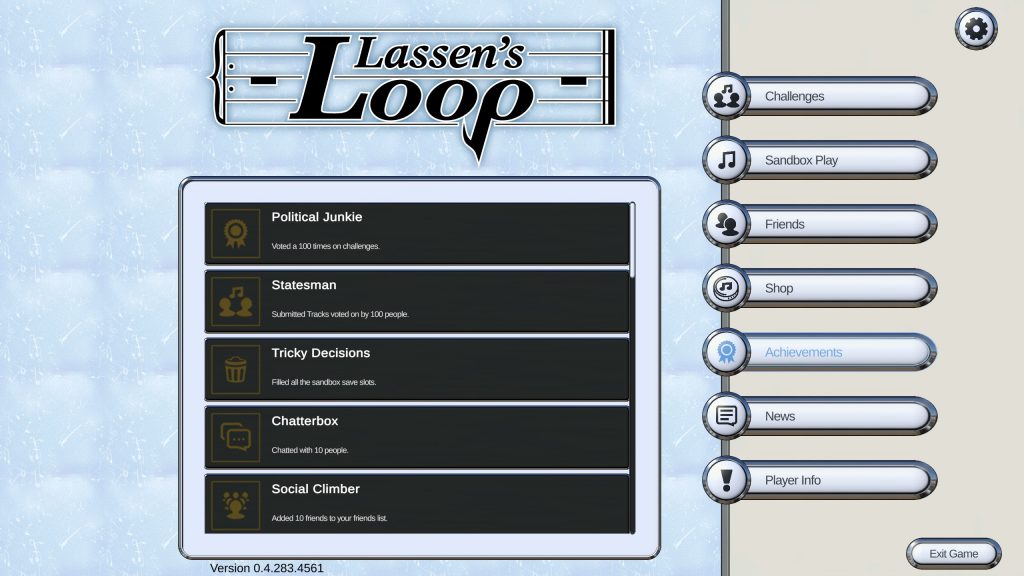
The great thing is that if you like it and buy the full version, your account is the same. All the songs you created are still there, as are all the cards you were given; only now there are even more!
While it’s true you can make an absolute cacophony in this app, you can also make some pretty good stuff. It just takes iteration, and you’ll be surprised how much halfway decent music you can make.
When it comes to Lassen’s Loop players are able to create their own unique tunes/songs by using different songs throughout various genres, are you able to tell us what challenges you faced in order to collect these different tunes?
Well, here’s the thing: we learned early on that genres actually mean very little. You can take a rap card, change its pitch and duration, swap the instrument, and suddenly it’s blues instead.
Think of Layla by Eric Clapton. The original was a fast-paced rock tune. He slowed it down, dropped its pitch a bit, and suddenly it was a ballad! Same music, just played differently.
So it turns out genres are more about organizing music than defining what it actually is. Players can make anything out of any genre, really. They just have to try.
Players of Lassen’s Loop are able to download the songs they create and use them how they see fit, what do you predict players will do with this feature?
I honestly don’t know, but I have all sorts of dreams. I would LOVE to go to a concert someday and see a band put Lassen’s Loop up on the big screen, start a song inside it, and then blend into playing that same song live on their own instruments.
Stuff like that. The sky really is the limit. The whole point of letting people own their creations was to make room for things like this, and for things we couldn’t possibly predict.
How do you plan on supporting the game post-release?
We have a year’s worth of new instruments, new music cards, new themes (skins), and new visualizers to release as general “stuff,” plus bigger features we want to build. For at least 12 months, there will be a new content release every month.
For example, we want to be able to record video inside the app so you can capture a song not just as an MP3 but with a visualizer playing.
We want to add support for more languages: Thai, Vietnamese, Norwegian, Danish, and so on. We want to add a “best of Lassen’s Loop” high-score table that lists all the highest-voted songs, so they’re recorded for posterity. Stuff like that.
The idea behind the different skin themes was that, if we have any success, we could do a collab with a band, use their colors, images, and logos, and create music-card content oriented towards their style. Of course, all of this depends on the response and on whether we can afford to do it.
Lassen’s Loop is a far cry away from the bigger projects of your past. Are you going indie for good, or do you plan to return to the AAA realm eventually?
Oh, well, AAA is a very volatile area right now. The budgets are so big, and the appetite for risk is so small (which is what you’d expect if $150m is being spent; you’d want to be sure there is a good ROI).
You end up being a very small cog in a very large machine, and when the ship does turn (slowly, but if the Exec Producer all of a sudden wants to make big changes to the narrative or whatever, based on current trends, well…), all of your work can suddenly end up on the scrap heap. There’s only so many times that can happen before you need to call it a day.
I think at this point I’m probably unemployable by large teams anyway; I’d want too much autonomy!
And what prompted this change?
Wanting to steer the ship.
A line from Star Trek: The Next Generation comes to mind, when Picard is talking to Will Riker about his potentially moving on to command a different starship: “While there is a certain cachet in being the First Officer on the Federation flagship, there really is no substitute for it being your hand on the tiller.”
I have all sorts of ideas for games that have never been done, and I wanted the freedom to actually get out there and try them.
What’s next for you after the release of Lassen’s Loop?
Welllllll, obviously, there is the support of Lassen’s Loop first and foremost. But we have three other games currently in development, in various stages.
We have a proof of concept for a multiplayer air-sim fighter game (think Quake 3, but in planes, flying around a neon city). We have a weather game, using cellular automata to simulate actual weather patterns, and we have a UI-based game along the lines of The New York Times Games app, called Ten Minutes, that’s pretty far along. We should be testing that later this year.
So we have lots of things in the pipe. No resting on any laurels here (although that does sound very very uncomfortable?)
One of the questions we often ask here at Thumb Wars is “What is one misconception that the general public has regarding the world of video game development that annoys you?”
That everyone knows what they’re making before they make it. Games are all about iteration and trying things, and when something doesn’t work, letting it go and trying something else until you find something that does.
Making a first-person shooter doesn’t make it intrinsically fun just because it IS a first-person shooter. There’s still a LOT of trial and error involved in figuring out what’s fun and what isn’t in your implementation.
There’s this thinking that costs should magically be lowered because nothing should be spent on wasted time and effort, whereas making games is almost ALL wasted time and effort. You’re often making something that’s never been made before: how can you know ahead of time everything you couldn’t possibly know, when no one has ever done it?
(That said, some of the wastage on larger projects has to be seen to be believed. Part of the problem is that if you have a five-year development cycle, often by the time you reach the end of it, the market you were targeting has moved on and there’s little appetite for what you spent five years making. So course corrections are routine, but extremely expensive, since now you have to redo two years’ worth of content. So much cost and waste!)
Another one is that you can avoid all the major pitfalls of development, do everything right, make a high-quality product, and still fail entirely due to circumstances beyond your control.
Heretic II was a minor success that should have been a major one, but wasn’t, because Half-Life came out two days later (a year late itself, I might point out, per that earlier comment about iteration, whereas Heretic II was done in eleven months, start to finish).
More recently, LawBreakers (made by Cliffy B’s studio, Boss Key) was a high-quality arena shooter that had the misfortune to come out in a world that already had Overwatch. Had Overwatch not existed, LawBreakers would have done brisk business. But it did, and LawBreakers did not.
After working on numerous big name games can you tell us what it was like to work on a game like Lassen’s Loop?
Well, you wear many hats, that’s for sure. When you are a small cog in a big machine, you tend to do one (or a couple) of things and do them in great depth. When you are a very small indie, you do It All.
Like I have any business choosing which analytics company I should be using? But someone has to, so I did it. I made all the achievements. Like, I know what a good achievement is? Ha! But again, if I don’t do it, it doesn’t get done.
I created a lot of the art for the UI myself. I wrote about 75% of the code. I spent a lot of time setting up tools and creating the nightly build machine. I had to learn all the unexpected stuff you have to do to actually release a product on modern iOS or Android (the Google Play Console can honestly go die in a fire, if I had my way. I have a six-page document typed up on how impossible it is to use, ready to be thrown at Android developers, if anyone cared to listen).
And Unity. Don’t talk to me about Unity. So useful and yet so aggravating at the exact same time, and often over the same feature!
Talking about big name games, the gaming industry is in a rather troubling place with numerous studio closures, mass layoffs, and so much more. Can you tell us how you feel the industry could begin to grow and fix itself after these many unfortunate situations?
I think we hit maximum growth a while back, and that’s part of the problem. The current industry is built around constant growth, and we’ve hit maximum saturation. This generation of kids has grown up with phones, mobile, consoles, web, and all the rest of it. There’s no stigma in being a game player anymore. The implication is that we’re now a zero-sum game. In order for my game to be a hit, yours must suffer in terms of player time.
Players only have so much time to give, and now it’s being impacted by several factors. Long-term games they have a lot of investment in, and don’t want to see that investment wasted (my wife is on level, what, 4706, of Candy Crush Saga? Good luck getting her to try something new!). Games where they have a social investment (if all your friends are playing Rainbow Six, why would you move to Marathon?). Also, a lack of funds. If you don’t have a lot of spare cash to spend, you spend it on something where you know you’ll get a return. So you’ll go for the next CoD iteration or GTA, because you know what you’ll get.
And that’s not counting the impact of mindless, non-interactive doomscrolling on TikTok, Snapchat, Instagram, etc. That all takes a chunk out of possible gaming time.
We need more investment in trying new things. Instead of spending $100m on one big bet, we need 20 different studios, all given $5m, to see what new large IPs can arise out of that. Throw a lot of stuff at the wall and see what works out, what players respond to.
Not every game has to be photo-real with massive 50-hour campaigns. If Vampire Survivors can have the (well-deserved) success it’s had, then it’s not like every game needs to look like the most recent Indiana Jones game (which is visually stunning, it has to be said, and plays great too! Machine Games knows their stuff. Very much a fan of their work here.)
On the subject of some of your earlier games, some of them have changed direction significantly. Most recently, it was announced that EA titles like The Sims would have in-game ads from their new EA Advertising venture. If this was suggested/created during your tenure on The Sims 2, how would that have changed your approach and the finished product?
Oh, if EA could have gotten away with that then, they would have. EA has always been a company that makes money out of making games, more than one that makes games that make money. A subtle but crucial difference.
We did have to deal with this sort of thing anyway: exterior entities making demands of the game. When Drew Carey was put in Sims 1, there were expectations of that character. Having Avril Lavigne and Christina Aguilera in Sims 2 as directable NPCs did unbalance the game a fair bit, since there was a lot of social game you couldn’t do: you couldn’t make out with either one, for example, and neither of them was allowed to wet themselves.
The issue here really is: what is Sims 5 going to be? Just making the same game, only bigger and better, isn’t going to fly anymore. You can’t just add more Sims, more objects, and larger lots anymore. We’ve reached the edge of that envelope. Sims 4 did that excellently (major hat tip to the team there), and there’s no need for growth along that vector.
Whatever is made, it needs to still be The Sims and yet also be something different. Maybe lots of small mobile mini-games, where you can take your Sim (and its achievements) from one type of game to another? I honestly don’t know what I’d do, only that it wouldn’t just be More Of The Same.
Whether it’s Jedi Knight II, The Sims 2 or Age of Empires: The Definitive Edition, you’ve been part of some truly generational games. How does it feel to know what you’ve created is so beloved by so many gamers?
I was only a small part of the success of any of those products. It was a team effort, as it almost always is for any major success. Lots of things had to come together at once to make them what they were, and I was just lucky enough to be along for the ride.
It’s always nice to hear that someone had a good time growing up with a game you contributed to, though. 🙂
AI is a contentious subject in the gaming industry especially. Having seen a number of changes in the industry, and a whole collection of new tools launch over the years, what is your opinion on the use of AI in creative endeavours, especially gaming?
Well, first, let me be clear about Lassen’s Loop, there’s no generative AI in the game.
That said, AI isn’t going away, that’s for sure. Fortunately, or unfortunately, depending on who you talk to on the development side, AI tools can be extremely useful for game developers.
For a lot of gamers though, AI means one of two things: either plastic-looking imagery that has too many hands and no feet, or as an excuse to fire people and have machines do their work for them. There are also the issues of data center usage and training AIs on copyrighted material they had no rights to, and those are real problems.
But is using AI for code okay? Where is the line? I suspect it’s different for everyone, and so contextual these days that it’s genuinely hard to draw a single one.
What if a game that everyone enjoys only exists because a solo developer used AI to help code it? Should they be shunned? That game wouldn’t exist without AI, and no jobs were lost, because there was never any money to hire anyone in the first place. Extending that, should you only be allowed to make games if you can pay everyone you might need up front? Is development now pay-to-play?
AI is a great leveller. But, let’s also be clear, AI isn’t going to create ideas for games. It can only offer what it’s already been trained on, and unseen combinations of things already done. It’s never going to come up with the next Katamari Damacy by itself.
A lot of people can now make things they never could before, but that doesn’t mean experienced devs aren’t worth anything. They’re the ones who stand to gain the most from it when used as a productivity multiplier, not a replacement for craft.
And in that similar vein, UE6 has divided fans and developers with the news that they’ll be deprecating Blueprints. What are your feelings on that, and how would it affect your future work, if at all?
Well, Blueprints are being deprecated for two reasons.
- It doesn’t scale. You can make a terrific card game using only Blueprints, but if you want to make an RTS with 10k units running around, you’d better not have Blueprints anywhere near it, because the overhead of running Blueprints per object per frame is fairly significant. Epic is actively reaching for the high end with Unreal, in terms of rendering and processing.
- They’ve effectively abandoned the low end of development to Unity, since Unity is far easier to get into initially and stand things up quickly, but Unity is far harder to scale to the kind of performance and rendering that Unreal can handle. And to really get that performance out, you need to Not Be Using Blueprints. Blueprints doesn’t work well with AI. So the answer is to remove it, add Verse, which is text-structured, and then AI can write code for you.
That’s really it for the reasoning.
It’s sad, because Blueprints, by exposing engine features in a relatively simple way, started the career of many a technical artist or fledgling game developer. To have that go away is a shame, but change is inevitable.
Thank you for taking the time to answer our questions. Is there anything that you feel we have missed that you would like our readers to know?
I do have a podcast too, Unsung Game Dev Heroes, where I talk to developers no one knows but who were instrumental in bringing some big-name games to market.
If you would like to read our review of Lassen’s Loop, click here.
For more Thumb Wars Gaming coverage, check out our article that talks about Assassin’s Creed Black Flag Resynced has sold over 2 million copies, or check out our article talking about ID Software’s recent statement regarding the layoffs.

Liam is a Senior Editor, Writer, and Critic for Thumb Wars and has been working with the team since day one. Liam is a big fan of all things gaming, as you will catch him playing all of the new releases from every genre you can imagine. Whether you find Liam gaming just for fun or spending his free time streaming, you will always find a smile on his face when it comes to all things gaming.