ILL, the terrifying, graphic, grisly and outright putrid first person horror game from Team Clout, and shortly after their latest story trailer reveal at Summer Game Fest, we got the chance to talk to Max Verehin, the co-founder of Team Clout and Game Director of ILL. We cover a lot in this interview, including aspects of the gameplay, audio, cut features and what they have planned for the future.
ILL is suitably terrifying, just based upon what you’ve shown off so far. What have you drawn inspiration from to nail the horror atmosphere? When presented with gore in the likes of the SAW franchise, or Final Destination, or any amount of games (of which you’re far past in that brutal and bloody regards), some people will call it gratuitous and unnecessary. Little more than torture porn. What do you say to those people that may think that of ILL?
Our team has extensive experience in both games and various art and cinematic projects. Our portfolio includes work on such acclaimed films and series as Until Dawn, IT: Welcome to Derry, V/H/S/Beyond, Longlegs, Azrael, and various Sony Pictures horror projects. Because of this, we naturally draw a lot of inspiration from cinema as well. If we were to highlight one specific film that served as an inspiration, it would definitely be The Thing directed by John Carpenter. It’s a body-horror classic that has continued to make an incredible impression for over 40 years, thanks to how exceptionally well the project was executed in terms of practical effects and its approach to immersing and terrifying the viewer.
As for games, we can highlight Half-Life 2 and its famous episode “We Don’t Go to Ravenholm”. In that chapter, an unexpected atmospheric shift occurred, throwing players into the most ferocious onslaught of bloodthirsty enemies. Yet, despite this incredibly oppressive and grim atmosphere, players could still enjoy dealing with those creatures alongside the tension. That is exactly the balance and effect we are aiming for in our game. To achieve this, we have to keep in mind that technology has significantly changed, player expectations have evolved, and the emotional bar needed to achieve a similar effect has risen very high. Therefore, we don’t try to insert gore for the sake of gore or turn the game into torture porn – on the contrary, we use it only where it is necessary and required by the gameplay or story. First and foremost, we are battling monsters, not humans, so our task is to use everything we have to achieve those raw emotions in today’s realities and make the game scary yet fun to play.
One click and you're done. Thank you!
It’s been a few years since you announced ILL, how has the game changed over that time? By the time the game releases, it would have been in development for six/seven years, at least. What is the reason behind this? Feature creep? Disjointed development? Changing direction? Scope? Something else entirely?
Since the announcement, we’ve partnered with the Mundfish Powerhouse initiative, which allowed us to expand our small team from around 10 people to 70, streamline our internal processes, and transition the project into full production. Before that, we had to work on various art and film projects in parallel just to fund the game, but now we are completely focused on ILL. Of course, some ideas and designs evolve and change over time, which is an inherent part of any development cycle, but our original vision remains unchanged. We are still striving to realize all our boldest ideas that originally brought us together.
We’ve seen a few instances of a big old guy in a Big Daddy like suit, who blows away one of the Aberrations. Who is that?
I assume you are referring to our trailer from last year shown at Summer Game Fest, rather than the new Story Trailer we recently revealed at State of Play.
Of course, we cannot disclose all the details just yet, but with our latest Story Trailer, we’ve started pulling back the curtain on the plot and introducing players to the game’s characters. The figure you are talking about is tied to one of the key narrative elements of the game. As you can naturally assume, from a story perspective, his objective includes holding back the onslaught of monsters as well. But can he be considered an ally? Is he the only one of his kind? That’s a question for later. In our game, you will never know who can truly be trusted and who cannot.

Talking of the Aberrations, there’s more than a few of them in the trailers you’ve shown. From small to room-fillingly-big. How many varieties are there? Do they have unique capabilities?
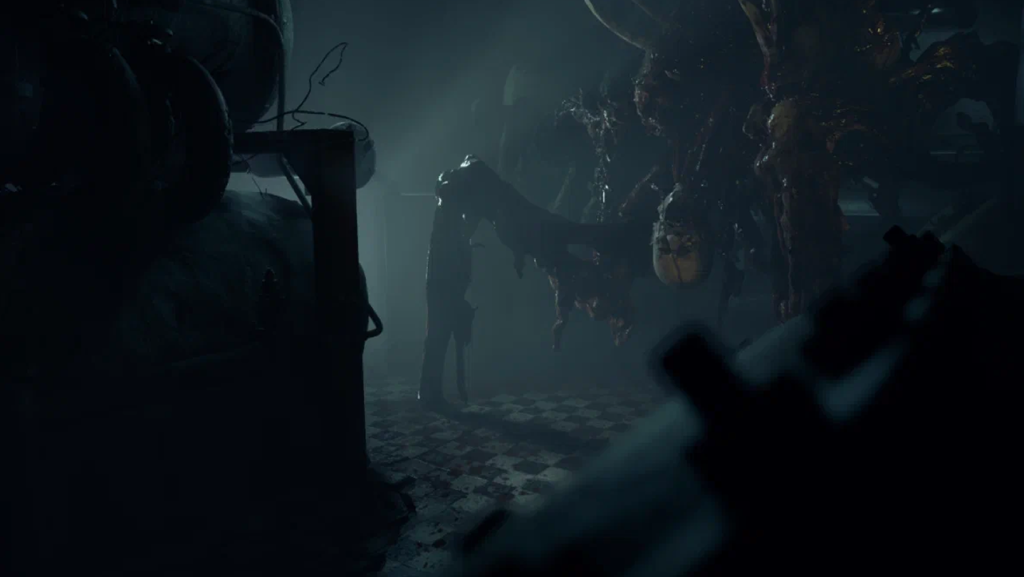
We aren’t going to reveal how many types of Aberrations there are just yet, but we can confirm that they will come in completely different sizes. As seen in our latest trailer, and as seen in our previous trailers where we showcased other variations of monsters, you can expect a wide variety of them.
And what exactly are they? How much of what they once were (presumably human) is still in there? Do they know what’s going on?
It’s still a secret what they actually represent and how they are connected to the mysterious entity that took over the research fort, but everything will have its logical explanation. They do retain some faintly human-like reactions, such as facial expressions or screams, which will create even more tension and discomfort in the moment, but they’re not human. So, players will discover the actual origins of these monsters when the game releases.
The dismemberment and gore are big selling points for ILL, but how versatile is the dismemberment? Is it limited to one point per limb, or dependent on where you attack, with what, how close etc, therefore multiple different ways to dismember? Could you talk more about that?
Our dismemberment system is really detailed, and there will be many ways to dismember monsters. For example, if you shoot the left eye, it will blow away the left part of the monster’s head; if you shoot its hand, the creature won’t be able to pick up surrounding objects to use against you; if you shoot its leg, it will blow the limb off, causing it to fall and lose the ability to move properly.
We want players to literally see pieces of flesh ripping away from the monster’s skeleton. But there is a twist: severed parts can suddenly become an independent, autonomous threat, as seen in our Story Trailer. So our dismemberment system will have a huge impact on the gameplay loop.
The environment plays a big part in the gameplay, with bricks and pipes being prevalent as weapons. What other options are there?
We don’t want to show our full hand just yet, but there will be various environmental elements depending on the location and what’s available there, such as wooden planks, axes, and so on. However, it’s important to keep in mind that, for example, pipes torn from the walls will wear out over time with use. This means you will constantly have to keep moving and searching for new combat opportunities, especially under limited resource conditions.
Inventory management and item creation are nothing new in the genre, however, ILL contains something that is. “you’ll have to check your diverse arsenal for defects,” – how do defects present themselves, and how can they affect the weapons you’re making/gameplay? Could you explain and talk more on that?
Actually, after internal testing, we decided to simplify this direction. We don’t want to punish the player too severely – we want them to be scared and approach gameplay tactically, but we don’t want the experience to become frustrating. We want it to be fun to play first and foremost.
Therefore, combined with our dismemberment system, advanced physics, and the degradation of some melee weapons, we realized that this is where the perfect balance lies, and overcomplicating it would only cause frustration. So players can rest assured they will get an experience that delivers the true feeling of an action-horror game.
Any good horror game will heavily lean on audio, as much as visual. You’re using binaural audio to really hammer that home. How does that differ to other options, and how will it immerse us as we play? + What technical issues did this present when creating the world and audio itself?
Yes, to fully immerse players in the world of the game so that they can literally feel present in it, we use binaural audio. This allows us to literally crawl into the players’ ears and create a paranoid sensation as they navigate the environment, flinching at every rustle, every creak, and every scream they might hear around the corner.
In terms of technical challenges, we would primarily emphasize the overall hurdle of perfectly synchronizing the environment, its visuals, the sound accompanying every element, and the gameplay situations. They need to work in unison and amplify each other, rather than standing out in a way that makes one element feel like it falls short in emotional impact. Our goal is to deliver everything at the same consistently high level.
Is it open world or linear?
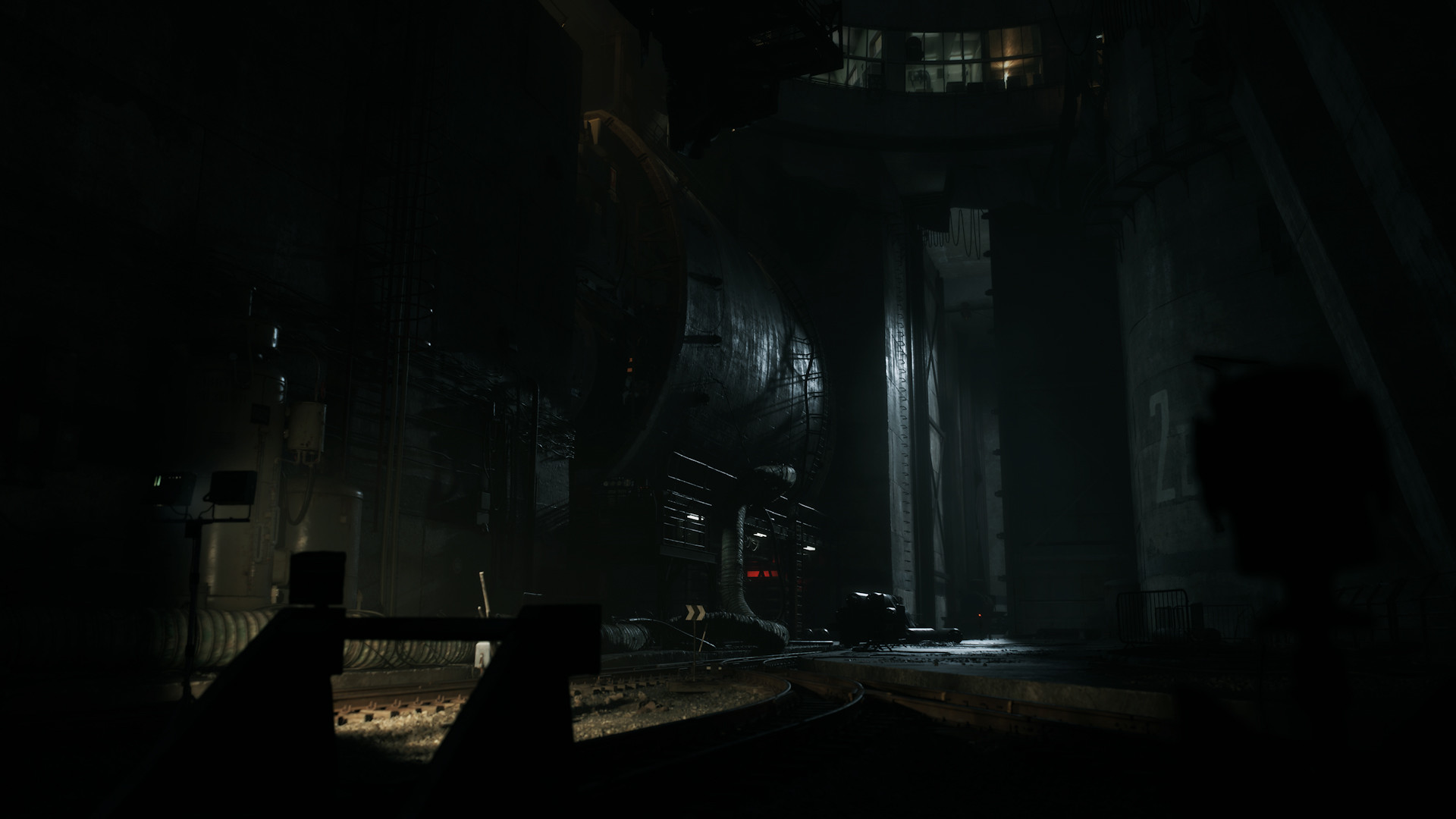
The world will be linear, but our large research fort will be massive, including a wide array of locations ranging from a hospital to a laboratory, along with areas we aren’t revealing just yet. These locations will not only be claustrophobic and enclosed but also out in the open freezing air – specifically so the player can experience the contrast and scale of our fort. Players will also have some backtracking opportunities where they’ll need to revisit previously explored locations; however, following certain story events, these areas can change and look completely different. The world is not static and evolves as the story progresses, as the mysterious entity and its Aberrations gradually reshape it to suit their needs.
What steps are you taking to ensure there’s some replayability for gamers? New Game+? Challenges? + Are you planning DLC/an expansion?
We can say that right now we are entirely focused on developing the main game and all its core elements, so we aren’t thinking about any additional content yet. We will definitely keep an eye on player feedback, but we ultimately want the experience to be complete from the very start.
Has any AI been used to help with development, in any way? If so, how and in what way? If not, how come?
We do not use artificial intelligence in our development in any way that influences the creativity of our talents. We certainly see the benefits of AI in simplifying certain technical processes; however, the creativity and hard work of our team stand above all else, so there will be no content created using artificial intelligence present in the game.
First-person horror is always more immersive, and with that in mind, are you supporting VR in any way? A dedicated VR mode, perhaps?
We have definitely heard a lot of requests expressed by players regarding a VR mode, particularly for PSVR2. However, as I already mentioned, right now we are completely focused on the standard game experience. But if player demand persists in the future and there is interest from the platform holder, we are open to revisiting this question.
How do you see the future of ILL. A franchise? A spin-off movie? Something else entirely?
As the creators of the ILL’s world, we already have plenty of different ideas on how we could further develop the story, this world, and its mythology across completely different formats, but everything in due time. In our immediate planning horizon up until release, our sole focus will remain on the main game.
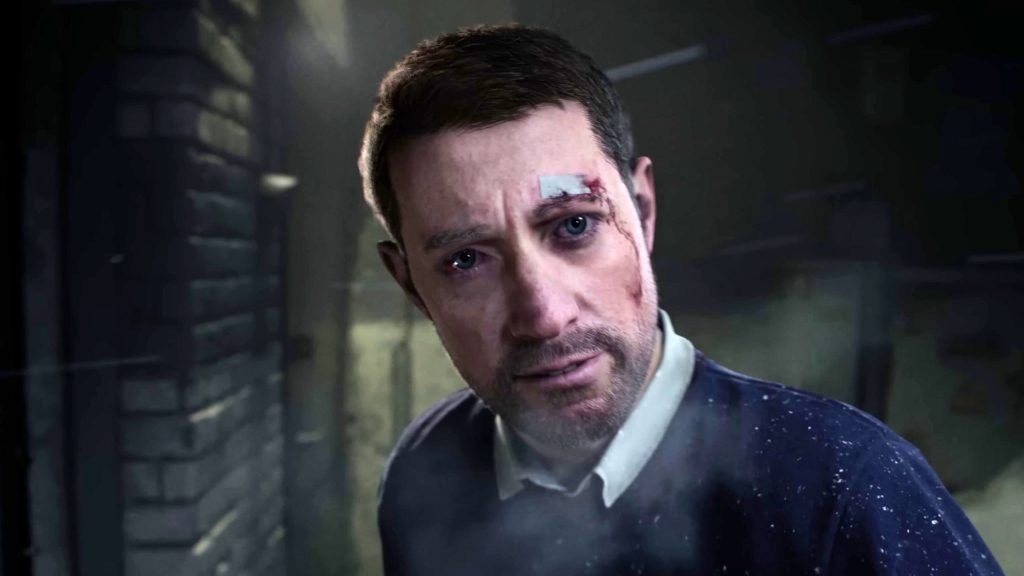
Why is it called ILL?
The title actually has a very fascinating connection to the plot, so it’s definitely not arbitrary. We want players to uncover the mystery themselves, though we already enjoy reading all the different community theories about it.
But we also settled on the name ILL because it operates on multiple levels and mirrors various dimensions of the game. It serves as a fitting description not just for the heavy atmosphere or the monstrous Aberrations, but for the setting as a whole, and occasionally the individuals trapped inside it.
Is there anything else you’d like to share with us that you usually don’t get asked, or get the opportunity to?
It would be interesting to talk about our development – the HorrorShow tool, which determines exactly how monsters appear before the player, from which direction, at what spot, and with what animations, which also influences their behavior in combat. This tool allows the Aberrations to be unpredictable, leaving the player guessing whether a monster is about to burst through a window, drop from the ceiling, or break through a door in the next location.
ILL is currently in development on PlayStation, XBOX Series X|S, and PC, with a tentative release date of 2027.
For your next read, check out our in-depth interview with the Game Director of The Relic: First Guardian, or our review of the same game.

Luke Addison is the Founder and Editor-in-Chief of Thumb Wars. Having previously been a part of multiple outlets over the years, including building an entire gaming team from nothing to something, he thought it best to forge his own path and answer only to himself. As likely to be found playing the latest game as he is in the kitchen relaxing (by cooking), he always brings the same bold and brash attitude to everything he does, with a heavy leaning on sarcasm and dry wit!