Marvel’s Wolverine, from Insomniac Games, is here. Years of waiting. Years of uncertainty with mostly radio silence after THAT leak, and plenty of apprehension to boot. Now we have it in our hands, but is it good? Well, yeah, but in some ways no, but either way, the answer to that question is a lot more nuanced. After playing through it twice, collecting everything and getting the platinum, I’m at a point where I feel like I can answer the question fully, and properly, and most importantly, fairly.
Insomniac Games’ Marvel universe has been in full swing since Marvel’s Spider-Man in 2018, and since then we’ve had the sequel and a spin off, Miles Morales, squashed in between. Now we’re on to an entirely new protagonist, the well known anti-hero Wolverine, and with it, a whole new wheelhouse. Gone is the open world, replaced with a linear set of levels. Gone are the gadgets, replaced with special abilities that vary combat. Some things remain though. The prevalence of Easter Eggs stay, with hints to future storylines and characters from the wider world there for those that want to find them. Graphically it’s outstanding. No expense spared on that front. But what about the rest?
Story & Characters
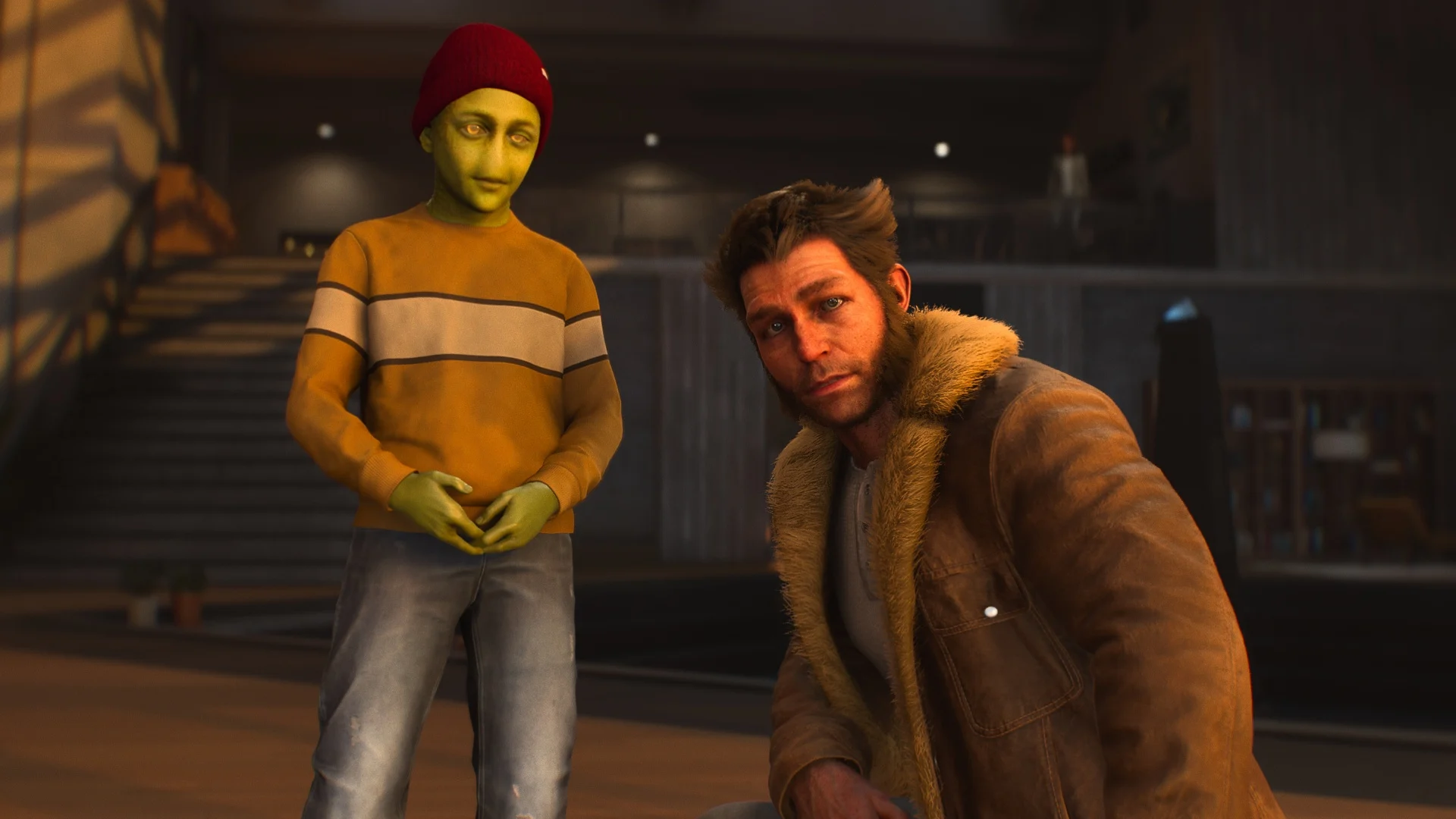
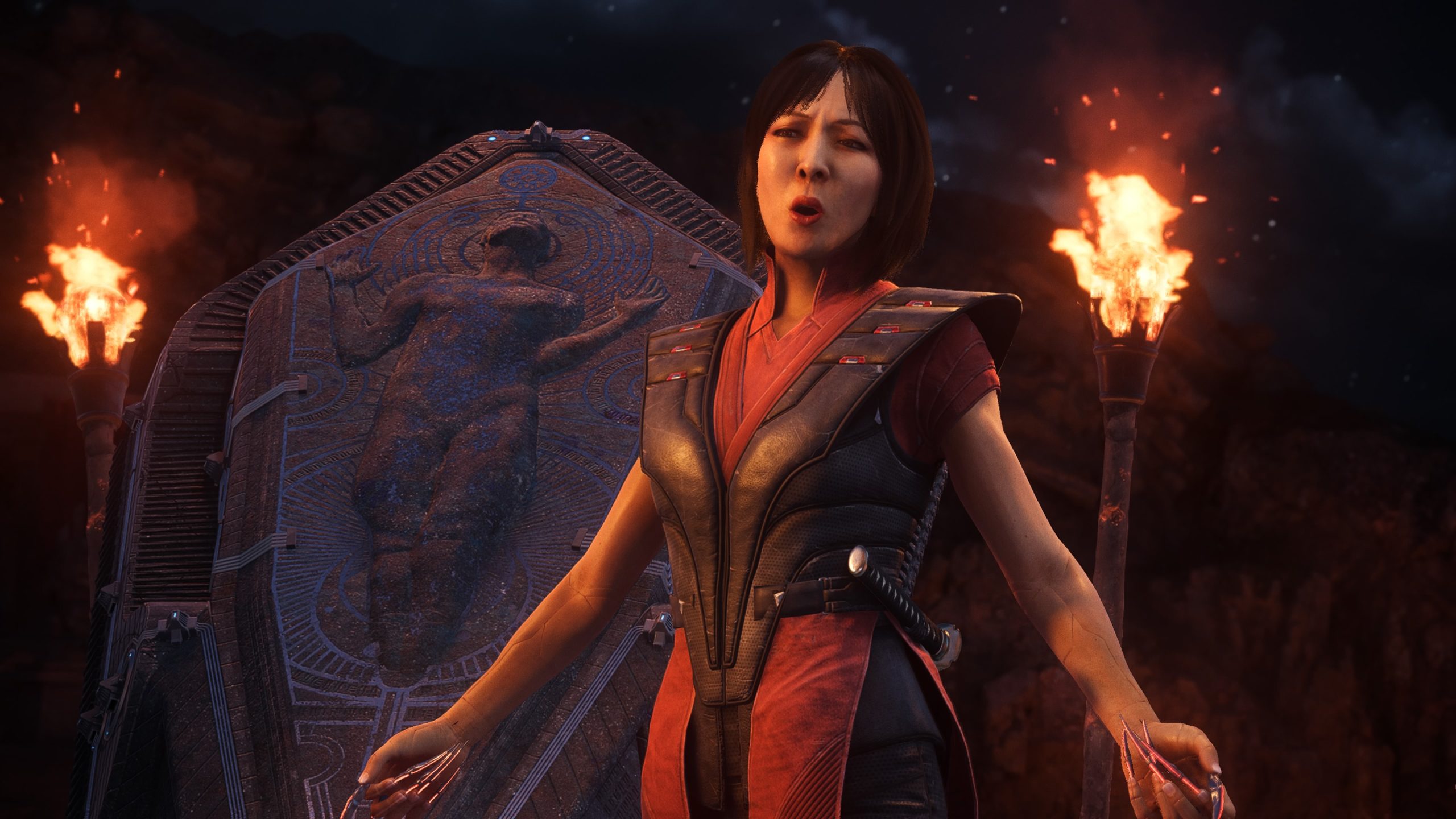
The story opens with a feral and animalistic Logan being saved from the wilderness by an unnamed character, who consequently turns out to be Nathaniel Essex. Then, modern day and a more conversational (barely) Logan is in a team with Mystique and Sabretooth, trying to save Essex from Trask. Some familiar names there in some less than familiar situations. Insomniac definitely take some big swings with the story of Marvel’s Wolverine, and some land, some don’t, and others are nonsensical.
One click and you're done. Thank you!
I couldn’t get my head around one specific moment in the third act, that revealed a major deviation from one character’s long and storied lore, no spoilers here, and the ending ten minutes flat out pissed me off, completely killing any excitement or satisfaction for what had come before, and what might come in the future. You’ll know it when you see it. The story also kept conflating itself between wanting to be a super mature story holding nothing back, and being a goofy comic book story.
Unlike Marvel’s Spider-Man, it couldn’t walk the line properly, and I really struggled to care or emphasize for the majority of my time with the characters, bar two moments; one between Sabretooth and Logan, and the other between Logan and Jean. It just didn’t click in that way for me. It’s not a bad story, per se, and it’s serviceable in the major moments, but a cursory glance and another rewrite would have benefitted. I genuinely believe things changed or pivoted heavily after the leak of 2023.
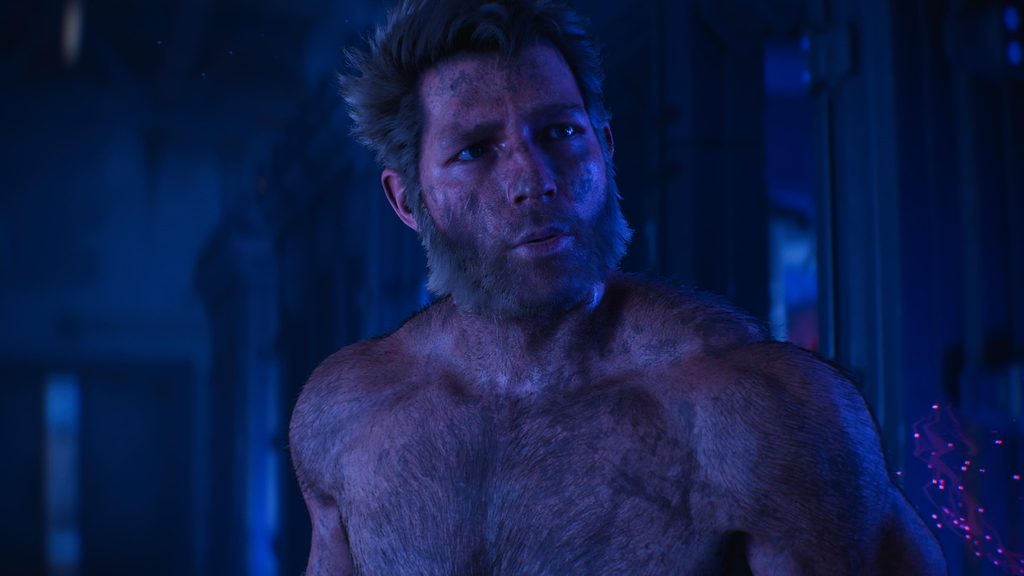
Or hope maybe. It really does bother me that as a character Logan ends in the very same place he begins, whilst everyone else around him finishes their character arcs and transforms by the end of the story. I think it’s genuinely bad writing, and along with some poor pacing throughout the levels, left a bad taste in my mouth.
That seems like I’m being nothing but negative about my experience, and while the story left something to be desired, the characterisations of our favourite characters of the X-Men universe were bang on. Liam McIntyre smashes it out of the park as Wolverine. In fact, I’ll go as far as saying he proved to me that I can deal with someone else playing the titular character in live-action, and taking over from Hugh Jackman. He is that good. He does what he can with the story, and nails the animal side of Logan, as well as the distraught, quietly struggling with his lack of identity, memory and who he is.
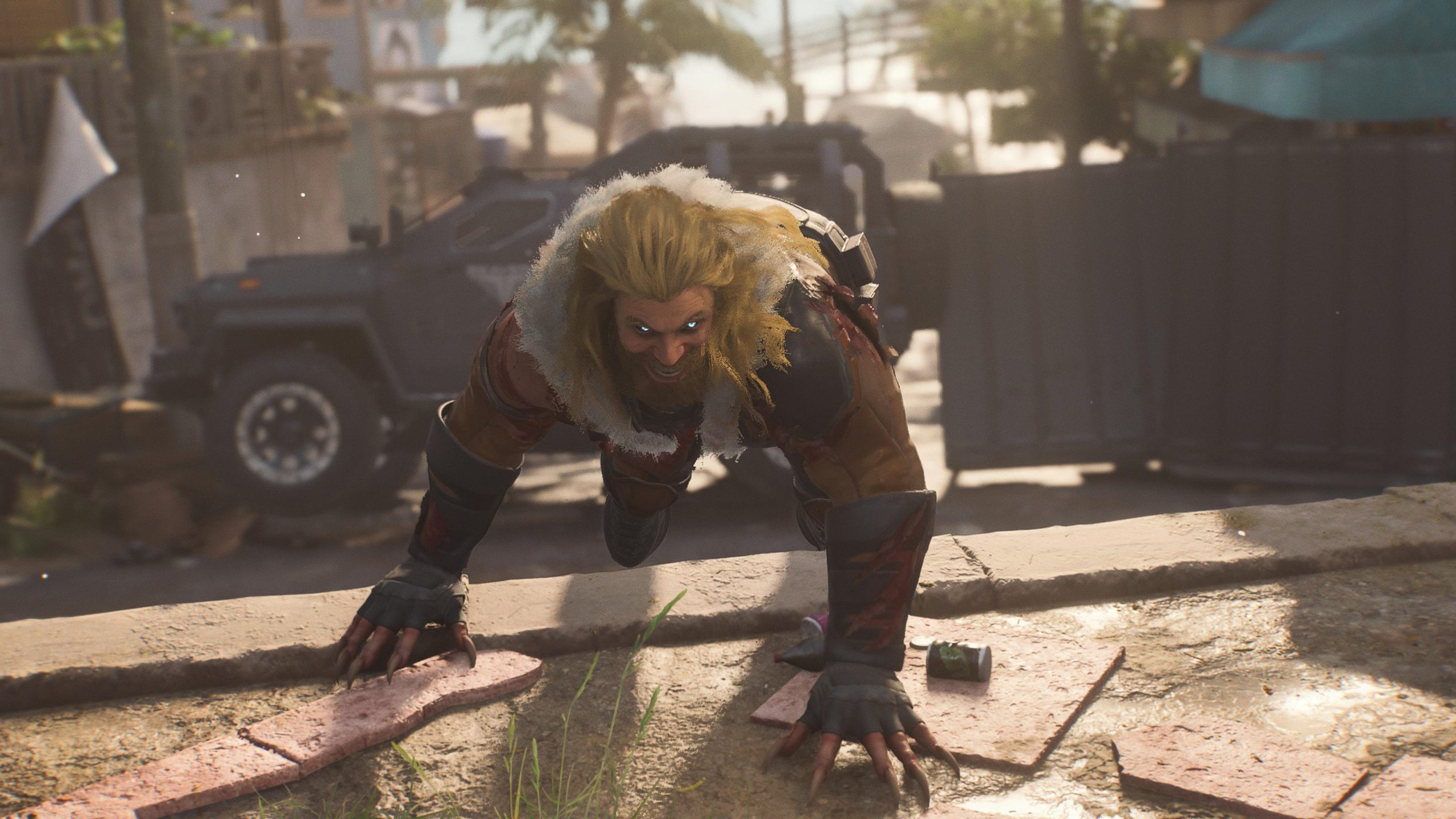
The other standout is Sabretooth, who has always had a contentious relationship with Logan, but Insomniac has woven a familiar, yet distinct version here. Mild spoilers, but while Sabretooth ends up in the more well-known position of being an antagonist to Logan, his early beats are fun. It could be best characterised as a brotherly relationship, with Sabretooth pissed at Logan’s disappearance from Team X, and then constantly ribbing him throughout the early levels, before ending up in an argument that doesn’t end well, shall we say. Despite somewhat of a smaller showing of him as time went on, he ended up being my second-favourite character, ahead of Mystique, Jean Grey, Essex or any others.
That’s not to say the rest of the cast don’t do a great job though. Special shout out to Troy Baker as the soft-spoken and well-measured Nathaniel Essex. Every single line drips with subtext and menace throughout, and is a very believable foil for Logan and Co, even when he’s not meaning to be.
Really Bloody Combat
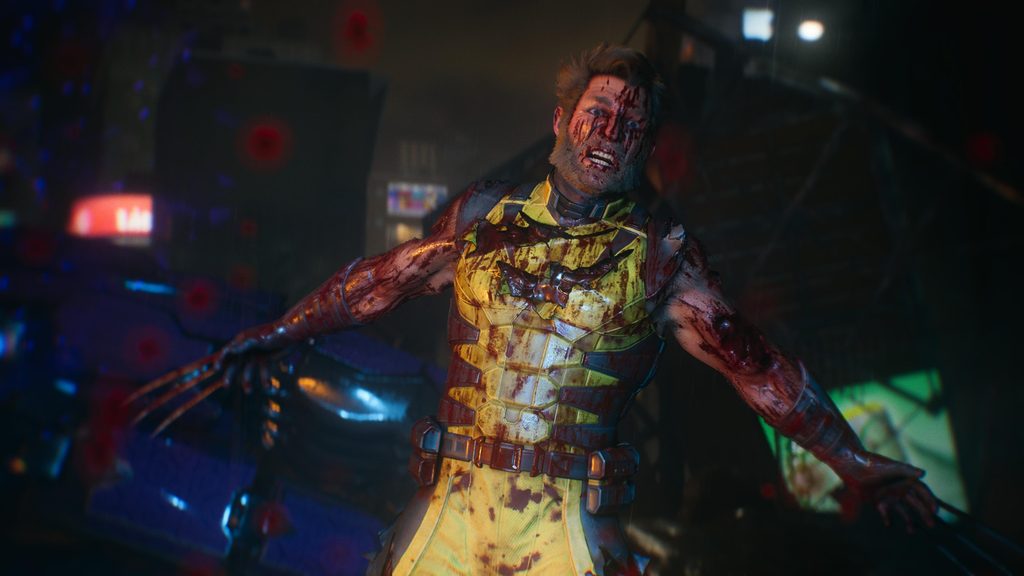
Beyond a story, what do we want from a Wolverine game? Blood? Check. Dismemberment and over-the-top gore? Definitely a check. I will preface all this by saying Marvel’s Wolverine is a hack-and-slash game that reminded me of an almost bygone era. There’s a lot of unimportant enemies that get thrown at you throughout each level, and your job is to turn them into as many pieces as possible. That makes it sound simple, and early doors, it is, but as you progress, and unlock more skills, more abilities, you’ll quickly realise it’s not.
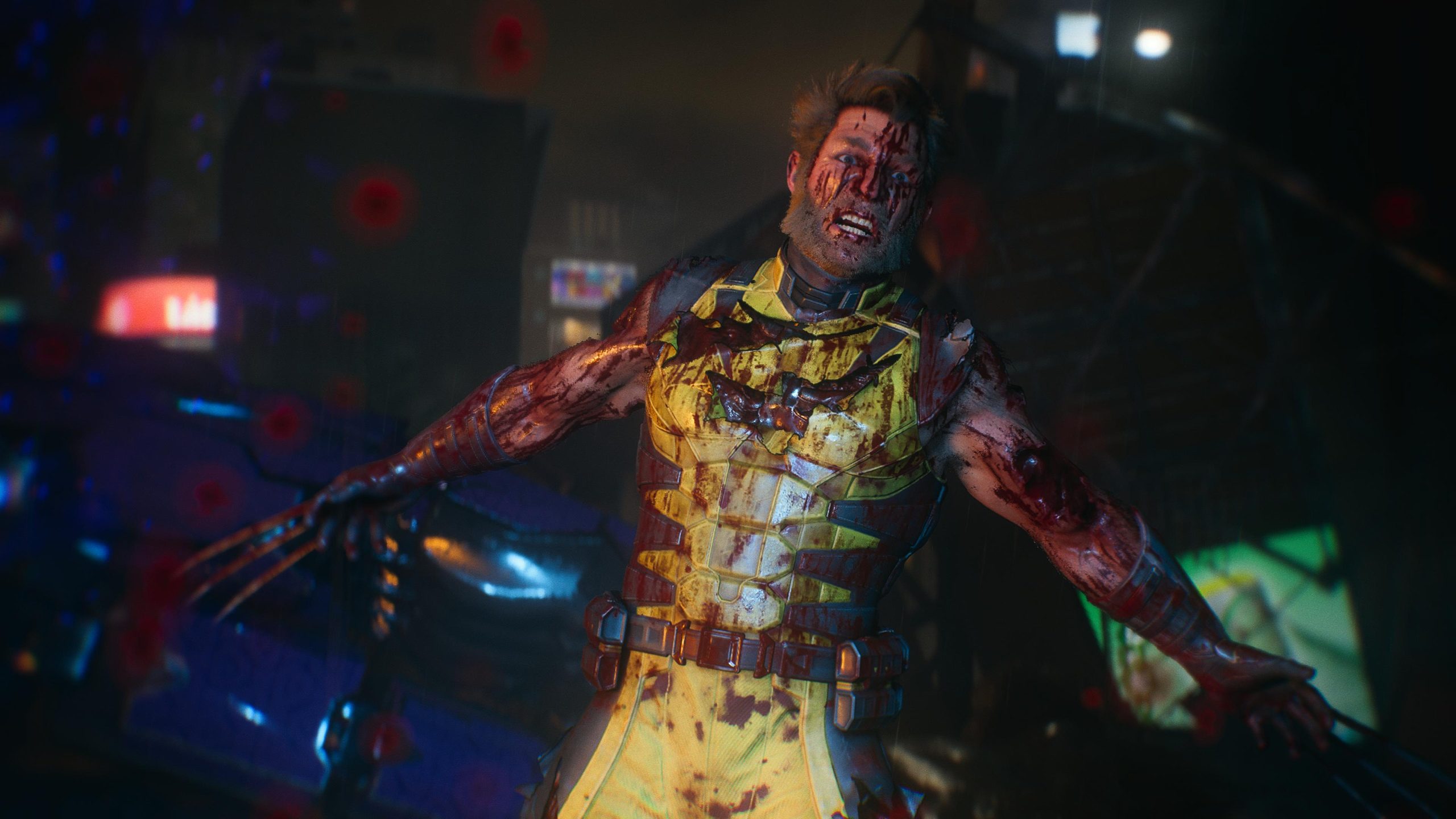
Proving they understand the character at a fundamental level, every attack, every kill, all helps towards Logan’s Rage Meter. Get it to higher tiers, you do more damage and eventually earn access to finishing moves, which are some of the most violent moves of the game. Beyond that, you’ll be able to lunge across the map (a personal favourite), or employ any of the six Special Abilities in the game, which include a Tornado Spin, a Drill-like attack, or a frenzied attack that has to be seen to be believed. Add into all of that the ‘basic’ attacks, and you’ve got a pretty expansive attack set. You can parry and block, which works in a similar way to Soulslikes in that you’ll need to employ it otherwise you can quickly get overwhelmed, especially on the high difficulties.
However, and that’s a big however. While combat can be pretty varied in what you can use, it’s also pretty basic in the sense that when I was fighting multiple enemies, it was as easy as tapping attack and parry at the same time. It made the combat a little less satisfying in that I had to time my parries against single enemies better than that of a group.
As well as Special Abilities, Marvel’s Wolverine also has a fit-for-purpose skill tree, that upgrades you passively in a variety of ways. Want to be able to charge up your special abilities faster? Regain health from parries? How about improving your rage tiers? There’s all that, and much more, and because it’s plug-in and out, you can change your build on the fly. It’s not the most in-depth version I’ve seen, but it works for what’s needed. I was always changing depending on the challenge ahead, and it made my version of Wolverine feel flexible and adaptable.
The game also has numerous boss fights, some big, and some small. Insomniac does what it always has done though, and includes some lesser known characters as boss fights. The end of the first level includes Omega Red, a character only Marvel die-hards would have heard of, and does him some incredible justice. Each boss fight ramps up the difficulty compared to the more basic enemy encounters, but also varies the challenge depending on who you’re fighting and their approach to you. Omega Red was a vastly different fight compared to that of the final boss, for example, but nonetheless daunting. By the end of the game, I’d had to use each of Logan’s different abilities to conquer the various bosses, and none of them felt like they were repeating the same methods as the one before it.
All in all, I have to be honest. The combat is fun. Great fun. It’s a lot deeper than first glance, and my combat by the end of the game was vastly different to that of the beginning, and if anything, was a big reason for me replaying straight away, just to see how different a fully powered Logan is in the early stages of the game.
Graphics, Audio & Performance
Graphically, Insomniac don’t really miss, and they haven’t here. It is a standout title where graphics are concerned, and really pushes the console to its limit. From seeing individual strands in outfits to the hair on characters heads (far superior on Logan’s compared to everyone else, especially the longer-haired characters), there’s not a detail missed. The titular character is well known for his healing factor, which is incredibly represented here. There are moments where you can see the inner workings of Logan’s body, from individual muscle fibres, to ribcages, skin layers and more. It’s a genuinely impressive achievement here.
The facial capture does fall short though. While the characters do look like their actors, and strikingly so at times, there are moments where the accentuated features lose some of their nuance, and the emotion from the faces just don’t show, or flat out aren’t there. It’s a minor thing, but as someone that expects the best from a AAA game with a huge budget and long development time, it’s worth mentioning.
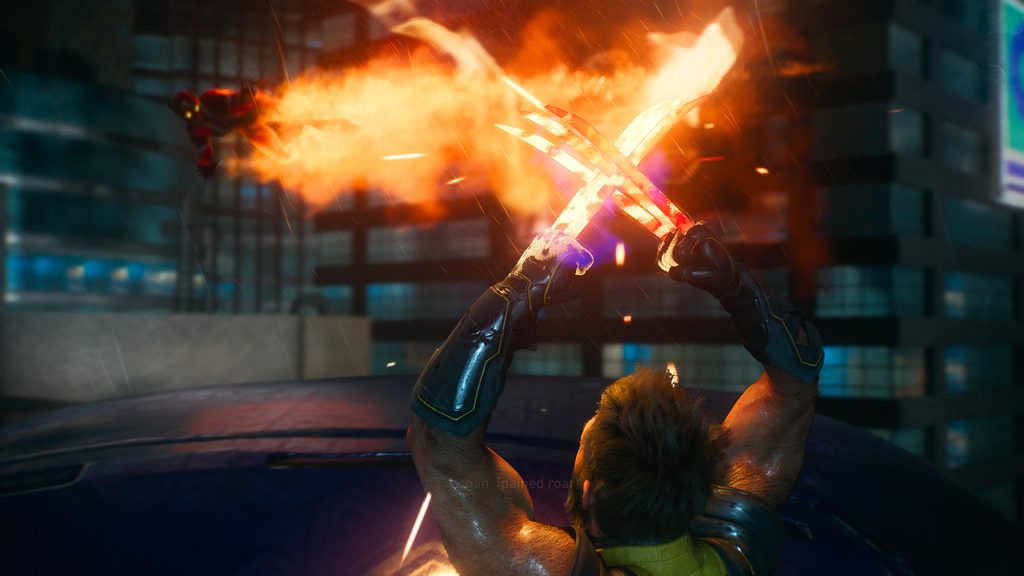
The world of Marvel’s Wolverine is not only beautiful to look at, with the vistas of Canada a perfect opposite to the neon-coloured streets of Japan, not to mention the iconic Madripoor as well. Each level, each location, feel alive and the art design is a particular highlight. I spent more time walking around in the snow of Canada and wet streets of Japan than I should, taking in the environments around me. The NPCs of Japan are a little devoid of any real character though, standing around to be blockers rather than actually providing a purpose as a character, but the buildings, ‘set dressings’, and general design are well thought out and need pointing out.
Audio wise, the design is great. The cast all nail their characters, but more than that, the audio of some specifics are great. Whether it’s the audio ping telling you to parry, or the sounds of the city below as you’re rushing across the rooftops of Japan, or the crunch of snow beneath your feet, there’s clearly been a lot of time spent between getting the audio down to be both functional and creative. It’s also never boring hearing Logan’s claws come out of his hands.
You’d expect all of this to be a drain on performance, but I didn’t once have any crashes, pop-in, frame rate drops or anything else you’d consider an indicator of performance issues. It ran buttery smooth, even on some of the levels that are less linear than the majority.
And the Rest
Similar to Marvel’s Spider-Man 1 & 2, Marvel’s Wolverine is littered with Easter Eggs, but also collectibles. Here, they’re in the form of Material Crates, which reward you with credits that can be used to buy a number of alternate outfits, some new, some iconic from X-Men history, and some deeper cuts; Nightmare Doors, which Essex introduces in the story as a way for Logan to uncover his memories and find out who he is, which works as a good accompaniment for the main story, and Whiskey Bottles, which function as nothing more than a commentary on Logan’s character in the comics, and his love of alcohol. I have to say the Doors especially are an odd inclusion, due to the ease of completion, alongside the immersion-breaking placement and implementation, although it’s nice to see the proprietary Ratchet & Clank portal tech turning up again;
There’s a lot to love about Marvel’s Wolverine. The combat, the pure, unadulterated gore, even some story moments. You have to give it to Insomniac for having the balls to take such big swings with their versions of the biggest X-Men characters, as well. There’s also some to not love. The hand-holding, while not as prevalent as you may think, can grow tiresome. In a linear game where it’s impossible to get lost, the indicators can prove irritating, and the scent trail, while an impressive adaptation of one of Logan’s most under-represented skills, could have been implemented in a different, less intrusive manner at times.
That said, I can’t lie. I had fun. The game is fun. The combat, that’s fun. The story is passable, but hits all the major beats you’d expect a superhero story to. And the presentation in graphics, audio design, art design and more is top notch. It’s not to the level of Marvel’s Spider-Man, and to many that’ll represent a disappointment, or even a sign to worry, but Marvel’s Wolverine is still better than almost any other superhero game in recent memory, and is a fantastic first entry into a version of Wolverine that has me as excited as that of the character’s future on film. If you’re a fan of Wolverine or Marvel, you’ll love this. If you’re a fan of hack-and-slash games, you’ll love this. If you’re not a fan of either, you may love it a little less.
Marvel’s Wolverine
Logan thought he was finished being Wolverine, but the past wasn’t finished with him yet. Three years after walking out on his team, Wolverine rejoins the mutant task force, Team X, in their darkest hour.
Driven by his fanatical belief in human superiority, Bolivar Trask is kidnapping mutants. Only Wolverine has what it takes to save them.
Summary
I think I’ve been pretty succinct with what I’ve said above, but in short, Marvel’s Wolverine is a flawed, but fun experience that nails what it means to be The Living Weapon. Combat grows as you progress, the skill tree is fit-for-purpose, the gore is always set to eleven and the story… well, the story, specifically Act 3, is one of low points. It’s not up the standards Insomniac Games’ has set itself with its recent releases, but it’s still a standout release in many areas. Wolverine fans will love every second, action gamers most of it.
- A beautiful game with a few facial issues.
- Combat never stops being high adrenaline fare.
- A great characterisation of our favourite anti-hero.
- Story pacing and some moments are poor.
- Hand-holding can get irritating.
- The linear approach of some levels takes away the need or want to explore.
Marvel’s Wolverine is out now on PlayStation 5.
For your next read, don’t miss our review of The Blood of Dawnwalker, or the party murder game that’ll make you turn on your friends, Trivia Murder Party 3.
Thumb Wars reviews every game based upon the structure of our review policy, and every review is on OpenCritic.

Luke Addison is the Founder and Editor-in-Chief of Thumb Wars. Having previously been a part of multiple outlets over the years, including building an entire gaming team from nothing to something, he thought it best to forge his own path and answer only to himself. As likely to be found playing the latest game as he is in the kitchen relaxing (by cooking), he always brings the same bold and brash attitude to everything he does, with a heavy leaning on sarcasm and dry wit!