One click and you're done. Thank you!
Since the reveal, Stranger Than Heaven has been a title that Yakuza/Like a Dragon fans have been keeping an eye on, maybe even more than if it had been an announcement of a new title in the aforementioned franchise. The departure from the usual cast and characters felt very reminiscent of the 2019 launch of Like a Dragon, which took the focus away from Kazuma Kiryu and put the onus on Ichiban Kasuga, the far less serious, but equally hard-hitting main man. Except, instead of a new protagonist, we’re getting a new protagonist and FIVE new eras. Five new settings. Five new periods to play in.
That’s right, Stranger Than Heaven is really shaking things up for Ryu Ga Gotoku, the studio behind the long time Yakuza franchise. A franchise that has made a habit of reusing assets and tweaking things slightly with each release, is now creating an entirely new experience from the ground up, including setting, characters, combat and more. And it’s well past due.
After a hands-on at the SEGA press booth at Gamescom 2026, which included three eras, three fights and a long look at the new combat system, I can say to fans that may be worried about the big change-up, don’t be.
Taking control of Makoto Daito, an orphan of a Japanese mother and American father, you take him on a 50 year adventure as you attempt to rise from nothing to something, and the eventual founder of the Tojo Clan, which will be familiar to any Yakuza fans. There’s everything you expect in a game from RGG, with side activities and quests, a long, emotional story, and maybe a bit of humour, although it does seem that the tone is far more ‘down the line’ than that of Kasuga especially. Less laughs, more serious.
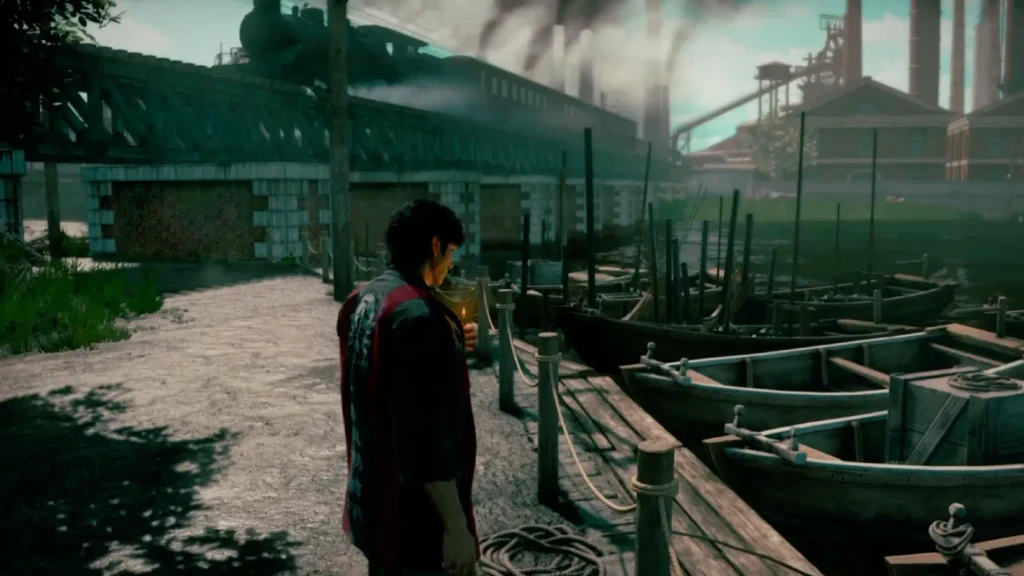
My hands-on preview showcased three separate eras, and allowed me to play around with the combat in each. This fight was the introduction to the new combat system, which completely throws everything we thought we knew about RGG’s combat system, again, similarly to how Like a Dragon heavily pivoted to turn-based in 2019. Now, instead of the over-the-top, cartoonish moves present in previous titles, the combat is more grounded, focusing on realistic combos. You can still tank a few hits from fists and dangerous weapons, and the health potions are still there, but there’s more of a focus on blocking and parrying than before, and the consequences far larger if you mess it up.
Also, gone are the button mashing moments of before. Combat has been retooled completely, with a whole new control system. The left bumper controls your left arm, left trigger controls your left leg, and the reverse limbs are controlled on the right side of the controller. It feels alien at first. It takes some getting used to. It’s a radical change and completely different to nearly every action adventure RPG game I’ve ever played, and yet after five minutes, I was moving through crowds of guys as if I’d never used any other control scheme. It’s as rewarding as it is punishing. If you make a misstep, prepare to take a hit, but if you time your hits and take your openings, you won’t struggle. Similarly, the thought of holding LB+B to block every time seemed obtuse and unnecessary, but quickly became second nature.
Beyond the basic attacks, it is possible to execute some grizzly and gory moves on those in front of you, but first you’ll have to stagger them. For the lesser enemies, you’ll likely kill them before this happens, especially if you have a weapon in hand, but the bigger brutes, and certainly the bosses, you’ll have plenty of time to build up the stagger meter and then send a boot to the face, or something else equally brutal. These were some of my favourite moments, if I’m honest, not only because of how brutal they can be, but because they’re satisfying and feel like they flow nicely within the fight. You’re not always pulling them off, but they’re regular enough that they feel like fitting highlights of just who you’re taking control of, and that he’s not a man to be messed with.
The new combat control scheme really stands out when you throw in weapons though. Holding on a knife, bat, or any number of other weapon you can use throughout the five eras will change how you approach combat somewhat. If you have a knife but don’t use that arm, well, what’s the point in the knife? You’ll just be limiting yourself, so it makes you very conscious about keeping the movesets varied, and in turn, the combos look as brutal as they do fun to pull off.
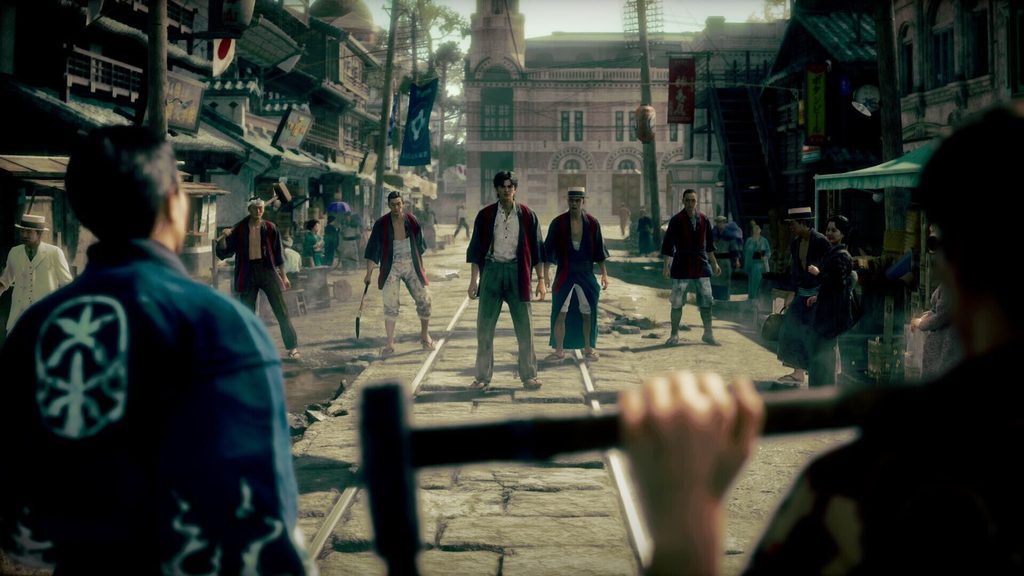
While the first two eras were group fights, sending me to take out large, varied groups of enemies, the last one was a ‘boss fight’, with a samurai in the middle of a street, as rain poured down. This was the hardest of the encounters, and represented a return to the difficult encounters the previous games from RGG have had. This took me several attempts, each time getting close but not close enough, before I finally got to a point where I beat him. It’s not Soulslike difficulty, nor should it be, but it was fun in it’s difficulty. It also highlighted a big difference between how I, and many other press, approached the different types of combat. I was more measured and took my time against the single Samurai, but waded in with both feet to deal with the two crowd scenarios.
Two small nitpicks though, the camera did end up stuck in some odd positions when it collided with the environment, which is something that hopefully gets remedied, and if you’re stuck and cornered by enemies, it’s difficult to get out without them bashing your head in.
There’s a lot of nuance in Stranger Than Heaven’s combat, and there’s no doubt more to show with more weapons to be showcased. Maybe some ranged weapons, and if so, how guns handle in the grounded combat will be interesting to see. Either way, the title as a whole is shaping up to be an interesting pivot from the ‘safe’ IP ground of the Yakuza franchise, and seeing how it expands the lore of that whilst standing on its own two feet is the most interesting thing for me. Just a shame about the unnecessary celebrity cameos.
Stranger Than Heaven releases January 15th on PlayStation 5, XBOX Series X|S, and PC.
For your next read, check out our hands-on preview of Ritual Tides, or our Gamescom 2026 experience of Wizard of the Coast’s Warlock.

Luke Addison is the Founder and Editor-in-Chief of Thumb Wars. Having previously been a part of multiple outlets over the years, including building an entire gaming team from nothing to something, he thought it best to forge his own path and answer only to himself. As likely to be found playing the latest game as he is in the kitchen relaxing (by cooking), he always brings the same bold and brash attitude to everything he does, with a heavy leaning on sarcasm and dry wit!