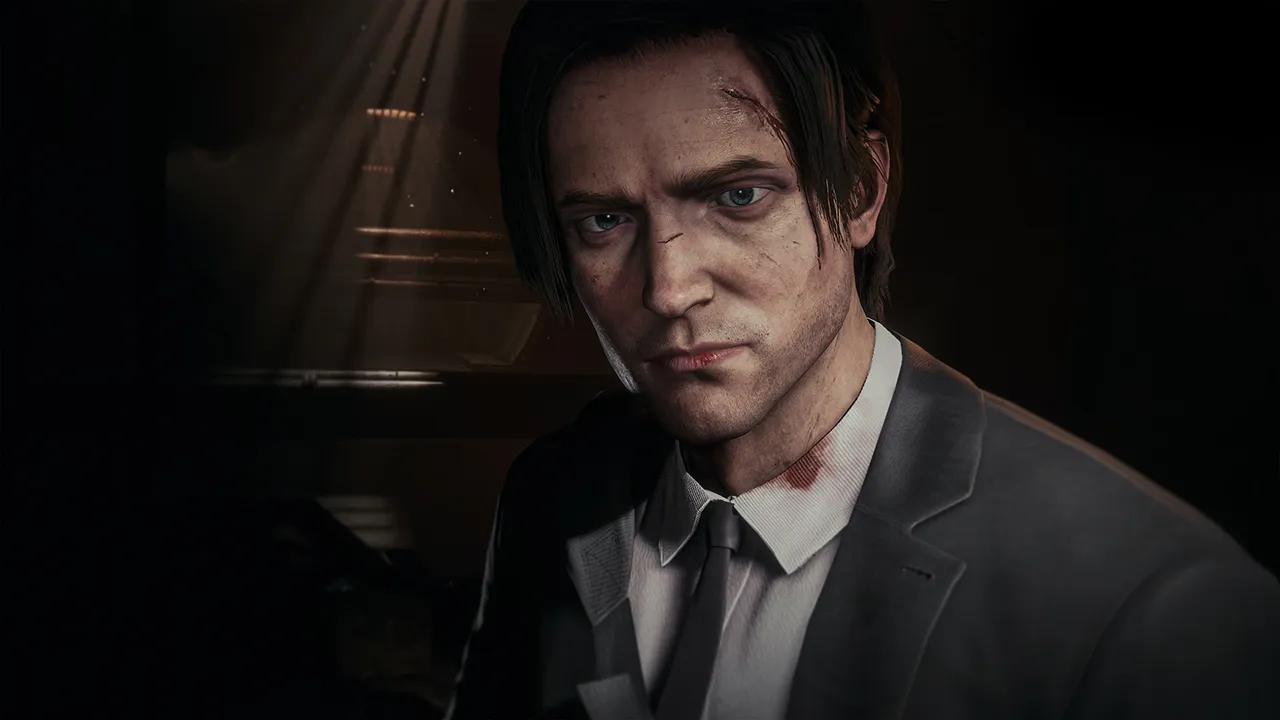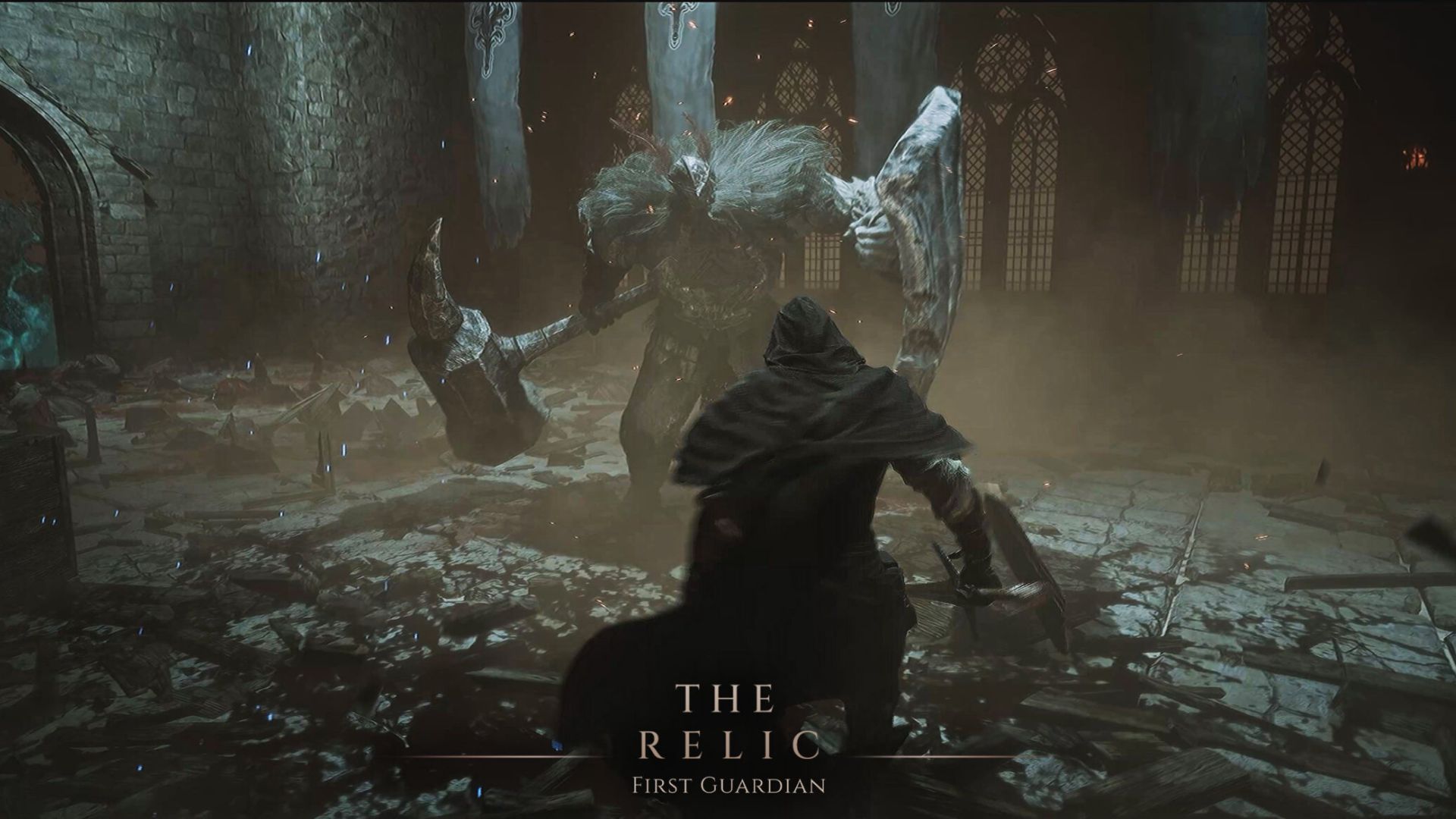
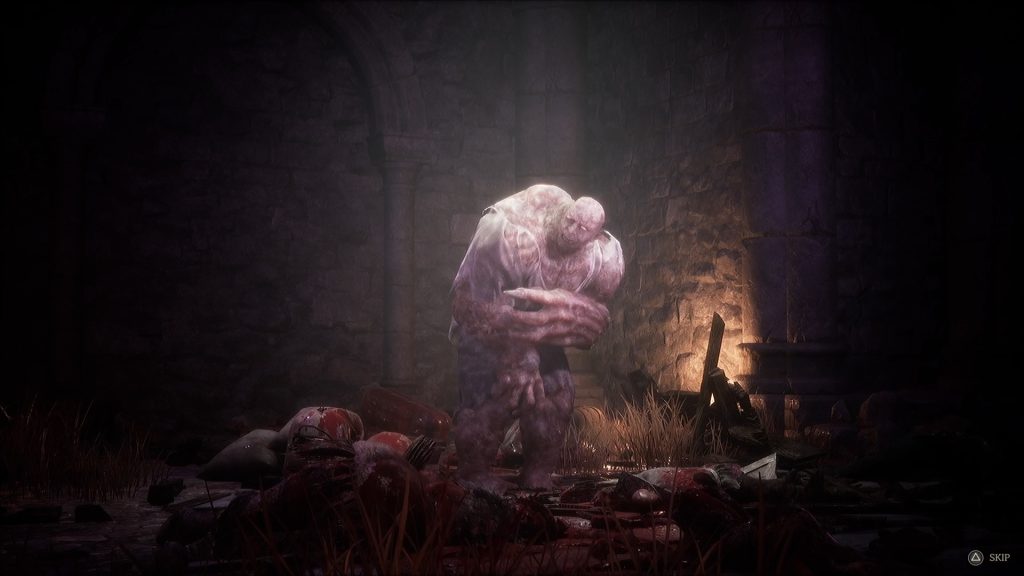
The Relic: First Guardian is set in the world of Arsilthus, and it’s in ruins. Once full of life and ready to expand, it’s run into hard times. Hard times full of looters, corrupted souls and nightmarish Brutals, some the size of houses, others ghoulish and supernatural, but all of them ready to kill the locals if they get too close. Awakening with little knowledge of what’s going on, you’ll play at the First Guardian, brought back to life to once again defend the land and its people by Eliza, a mysterious woman who occasionally will narrate your adventure, giving you clues as to what, who and when you were last here.
That’s the key to a lot of The Relic: First Guardian is going for. Like other Soulslikes before it, it is intentionally muddy with a lot of its lore, reasoning and events in the sense that you’re exploring and piecing bits together for yourself, but you’ll never truly feel lost or bogged down because of it all, and that’s largely due to the open world at hand.
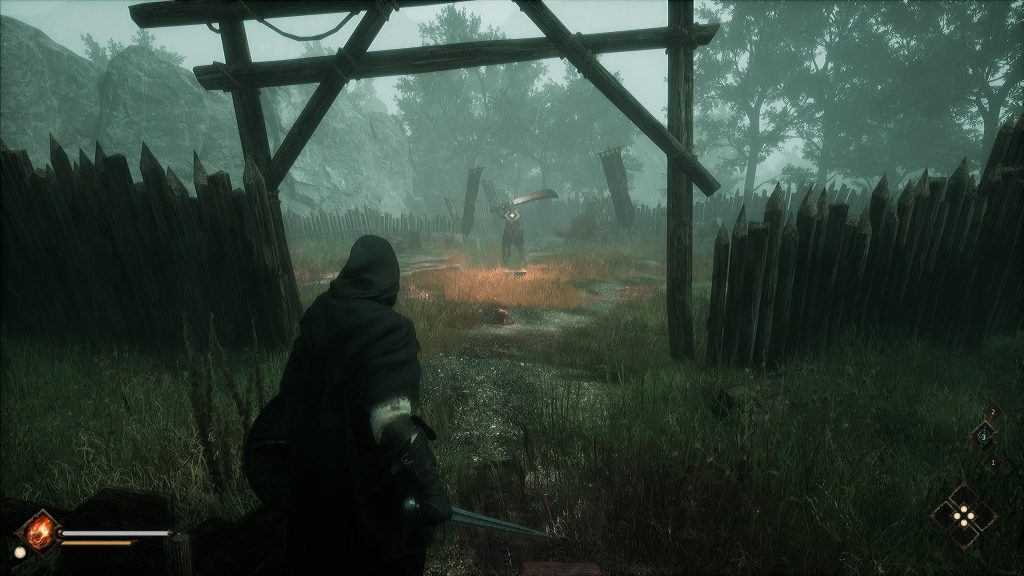
The open world of Arsilthus is one that is as dense as you want it to be. During my playthrough, I would backtrack periodically, be it due to turning in a quest – called Events this time round -, realising I’d missed a landmark, or to go back to a village or area to upgrade my weapons, relics or health (more on that later). It felt like every time I’d do this, I’d encounter something new. A cave I’d missed previously that housed a Brutal or treasure chest, an area infested with corrupted enemies that quickly swarmed and overwhelmed me, or just a waterfall with some unique items behind, and in some cases, a waterfall with a rock wall behind – the developers knew what they were doing here.
One click and you're done. Thank you!
There are countless opportunities to get lost in the world, be it with path offshoots, hidden caves, holes in the floor to new areas, ravines, churches, temples and so much more. It’s one of those games where you’ll struggle to stay on course and do what you planned when you started your play session, because there’s just too many other things to sink your teeth in. The world is engaging, with a real feeling of it being lived in, but not overtly crowded. There’s villages spread out, little camps of people working, praying, and going about their lives, and more besides. It must be said, once you encounter these villages a few times, you will notice the lack of routine from the NPCs. They don’t do much, and don’t do anything beyond being there for you to see. It’s forgivable though, as this isn’t exactly Kingdom Come Deliverance.
In between those villages, temples, churches and so on, are little pockets of enemies. Not enough to be annoying, but regular enough that you’ll feel like this is a world beleaguered and under fire. I would all too be close to death thanks to a previous encounter, no health potions and no rest points – called Tibelle’s Blessings – nearby, and run into a crowd of looters ready to try and finish me off.
Storytelling and Exploration Go Hand-in-Hand
The Relic: First Guardian takes an approach similar to that of the FromSoft games, in that most of the storytelling is found by the player. Whereas collectibles annoy me no end in most games, I found myself wanting to find the notes that tell the story of the world and the people in it. Most of these notes would start new events upon picking the first one up, and then lead onto the next, and next, and so on. At the end it’d either be a Brutal – a boss, basically -, or one last note that was usually tinged with sadness or regret.
My favourite, if that’s the right word, was that of a son who thought his own doting mother was an annoyance, beneath him, and offered nothing. He’d spend his time on his own quest for notoriety and affluence, desperate to earn as much coin as possible. When faced with his mother’s failing health and apparent incoming death, he chose to continue for another week to get more gold, then, when returning home at the end of that week, found his mother dead on the floor, clutching a cheap, plastic trinket he’d given her in pity months before. Driven mad by his own selfishness, he’s then one of those aforementioned Brutals you’ll encounter.
It’s this method of storytelling that does drive home how harrowing it is in the world of Arsilthus for its inhabitants, and how utterly disgusting some of them are. You’ll feel a range of emotions during your playtime, or at least I did, and it’s a surprisingly realistic mirror to the real world in that regard, even if nothing else matches up.
However, it is annoying that while listening to the fully voiced notes telling the stories of the world, you can and will be attacked by nearby enemies. This’ll close off the note, and cut short the narration, meaning you’ll end up having to go through the menus, of which there are a few, to find what you were just reading if you want to fully understand what’s going on. A simple fix of having the audio continuing beyond the note screen would be good, and save any potentially annoying encounters.
On the subject of storytelling notes, and in fact the general voice performances throughout the game, there needed to be some more quality control and better direction given to the actors, as, before the developers told us that there wasn’t any AI present in those aspects, both myself and Liam Magee thought there could have been aspects of it used in the vocal performances. Similar cadences between all the spoken notes can be distracting once you notice it, and barring a few of the bosses, even they speak in similar fashions, albeit in different sounds/accents.
Gameplay, Weapons, Skills and Quests
It does feel like the Soulslike genre is FULL of examples of what to do, and what not to, when it comes to combat. The Relic: First Guardian clearly paid attention to what’s come before it, as it has some significantly different ways of doing things. Firstly, stamina isn’t depleted during combat, at least, not from you attacking. You’re free to use your weapons as much as you want to attack, but stamina will quickly get depleted if you’re on the backfoot too much. Spend your time in Soulslike taking the patient, defensive approach? It didn’t take me long to realise this was a terrible idea here. I’d get wrecked if I wasn’t able to go on the attack quickly, and some Brutals especially will make that difficult.
It’s a refreshing changeup, and one that meant the action was more frantic, frenetic and fast-paced than others in the genre. The parry system is also thankfully very satisfying to use, with a big blue glow emanating from your weapon when you time it correctly. Get enough of those, or attack enough, and you’ll break the enemy’s ‘poise’, and they’ll sink to their knees and be open to attack.
I’ve already mentioned the variety on offer when it comes to weapons – as someone who gets overwhelmed when it comes Elden Ring’s seemingly unending armoury of weapons, I was glad to see that The Relic: First Guardian has scaled it back a little. There are five main types of weapons, including Sword and Shield, which was my main, a Battle Staff, a two-handed weapon, a dagger and a spear, with the differences coming in the individual ones you find in your exploration. With each item and weapon being a sole, unique item in the world, if you’re looking for a specific one, you better polish your weapons and go fight the right boss. This scarcity really does push you to check out each and every nook and cranny, and every single item pick-up you get.
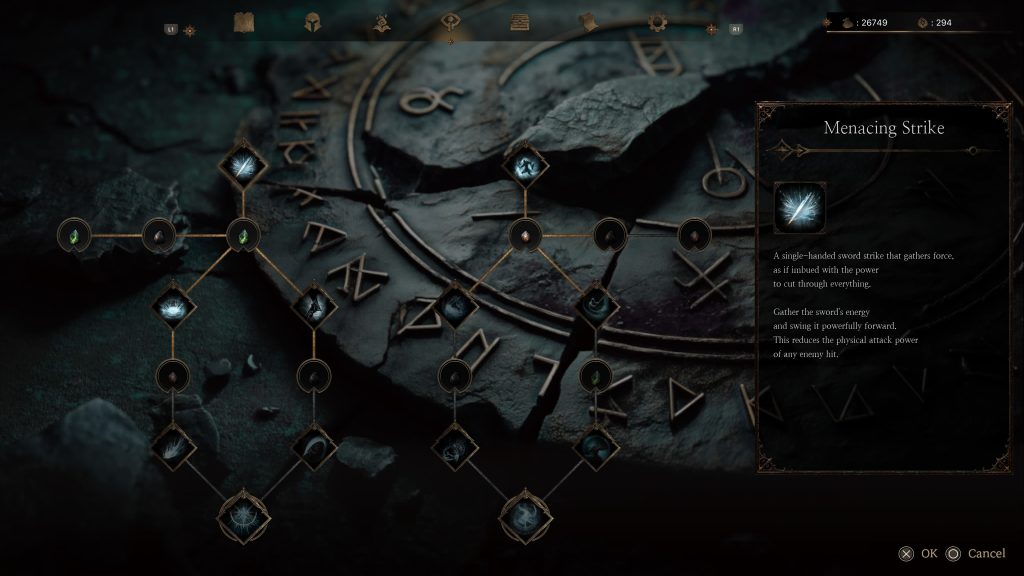
With these five types of weapons comes a frankly absurd number of skills. Each weapon type has its own skill tree which can be unlocked using Relic Energy, and these factor as your power ups. With a lack of a standard levelling up system in The Relic: First Guardian, I found this arguably the most important factor to making me feel like I was progressing. With the sword and shield I had several skills that buffed both my health and also made me into a sword-swirling badass. The power fantasy is real, but as with any Soulslike, even with these high-hitting abilities, you can still get humbled quickly.
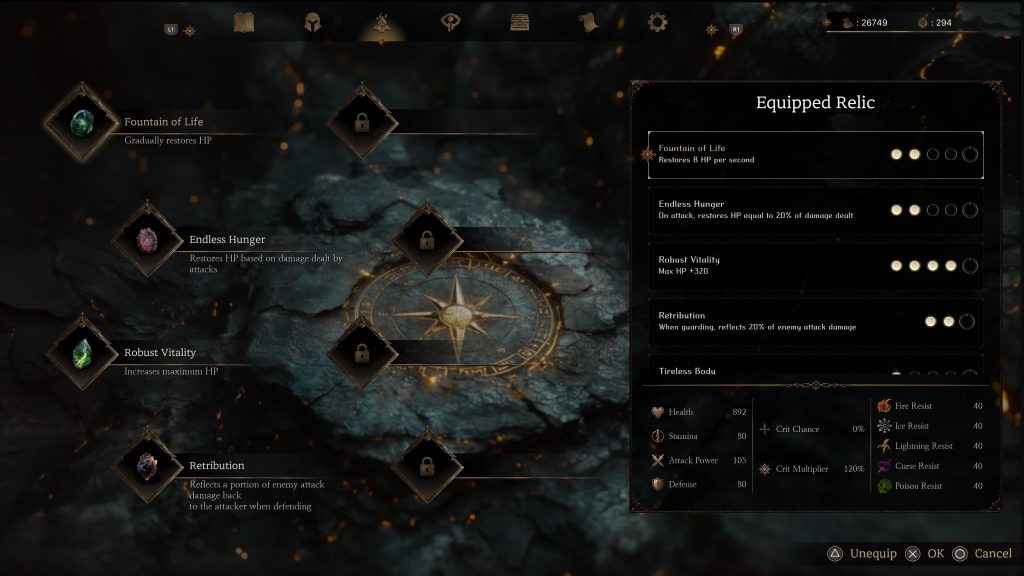
Not satisfied with just the skill system though, the game employs a Relic system, aptly named, that allows you to power up. Explore and find new ones, beat bosses to take theirs, or simply complete a quest, and you’ll be given a Relic that offers a unique buff to yourself. Whether it’s a boost to your health, a buff to incoming elemental damage or something else, there’s a wide array of them that’ll play into your playstyle.
As somewhat of an aggressive player, my Relics all ended up being health and damage based, and with buying skills that also buffed those specific Relics, I quickly felt as OP as you’d expect from a traditional levelling system. Not having that levelling system and doing it this way really rewards players for exploring and taking their time, instead of just rushing through the game. You can do that, of course, but you’ll be weak and no contest for the final trials, you’ve been warned. And that brings me onto what I think is the game’s biggest strength; the amount, and variety, of Brutals/bosses in the game.
The bosses, or Brutals, as they’re called here, are plentiful in The Relic: First Guardian. From hulking monstrosities that destroy entire areas of forest when attacking you, to small, rapid and hectic ghostly women that’ll wreck you before you realise, there’s a variety on offer here that’s hard to beat. Bosses in Soulslikes are nothing new. Some games do them well, others don’t. As for the types on offer, their stories and execution of them, and how they fit into the world, The Relic: First Guardian is one of the best.
When finding a note that started a new event, or being given a new one by some random villager on my travels, I constantly found myself wondering what was waiting for me at the end of the line. Each boss tested me in a number of ways, and no two were the same. Sure, there were similarities in the sense that they were big and lumbering, small and quick, similar weapons, and the like, but their background, their stories, and their designs were all different. It continues to be the highlight for me, and it’s what keeps drawing me back in to explore the same areas again and again.
The game does hand-hold a little, with its main menu keeping track of all three areas and the number of Brutals you’ve found/killed. It’s a constant reminder that there’s more to find, more to beat, and if you can’t, more that you can’t quite get the better of. It did seem that this counter was broken however, as in the first area I managed to go higher than the supposed 27 it contained. 31 in fact. And, talking of counters… death in a Soulslike is inevitable, unless you’re one of those super-human no-hit players you see, of which, I am not, but with every death you incur, a little counter creeps up each time. At first, you’ll find it irritating, and a reminder of failure, or your lack of skill, but as you progress, you’ll consider it a badge of honor, or at least, I did.
In somewhat of a contrarian attitude here though, the game doesn’t hand-hold on some important mechanics, and it works for the better. If you don’t explore enough, you won’t find or be introduced to the Relic mechanic at all, you won’t find Shard’s of Esser that’ll increase the number of health potions, and you may not even understand or figure out how to buy skills, as it’s buried away in a menu. Just like the game allows you to find and understand the world at your own pace, it does that with these mechanics, and while it may annoy or confound Soulslikes newbies, it’s a staple of the genre that long-time players love.
Performance Woes and Glaring Omissions
I’ve been pretty praising of The Relic: First Guardian so far, and it’s well deserved, but there has to be balance, and there are some serious drawbacks with the game, primarily, performance. I was playing on base PS5, as was Liam Magee, and we both mentioned to one another on multiple occasions a serious issue in frame rate, and pop-in. As you’re exploring Arsilthus, you’ll notice in the huge vistas and winding dungeons the regular occurence of assets popping in. It’s incredibly distracting, and continually ruins the immersion. Hopefully it’s something that can be remedied in a future patch, because as it stands, it really does tarnish the whole experience.
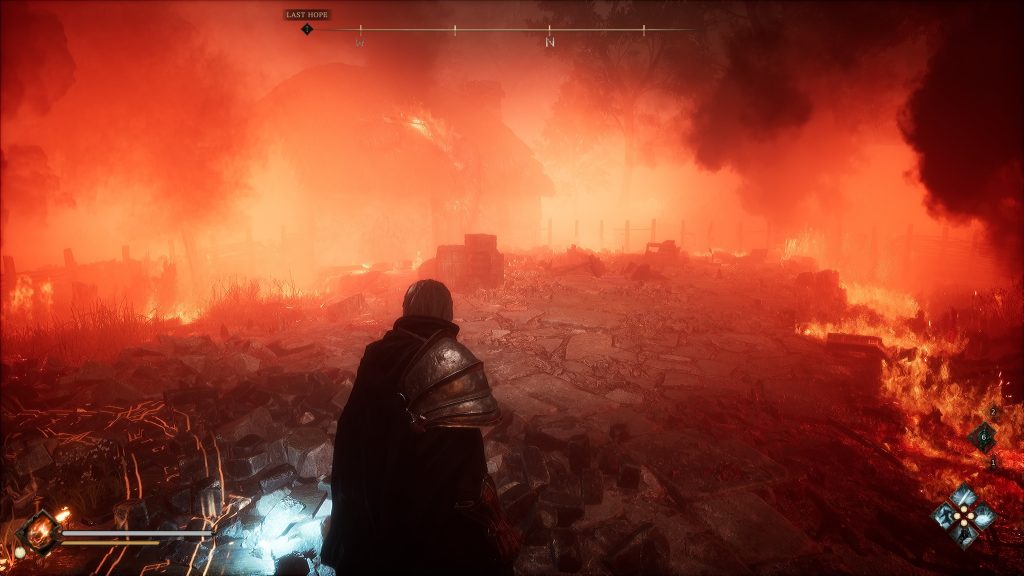
Separately, there’s multiple areas where the frame rate absolutely tanks, usually when there’s too much being asked of it at the same time. There’s one big boss, already alluded to above, that destroys forests when attacking you, and this is the first boss you’ll notice the frame rate issues. With the rain pouring down, the boss attacking, your own movements and attacks, it just proves too taxing for the game, and optimisation is needed. Later on there’s a village entirely engulfed in fire, and several Brutals one after another, again, same issue. It’s important to say that this was also an issue, albeit less so, when playing through the preview on my high-end PC, so it’s not just a base console problem. Maybe doing less in one go would have been a good idea, albeit that during those high-intensity moments, they truly are spectacular, until the frame rate drops significantly.
The other drawback is some of the animations, or lack thereof. Some of them seem janky and stiff, others are omitted completely. Whether an intentional design choice or not, the lack of jumping is criminal, especially when you can run too quick down a hill and literally fly down it, or if you’re attempting to climb up a mountain (good luck), or down ramparts to a new area, be prepared to be annoyed by the shortcomings of its design. Regularly I’d be climbing stairs and have to move sideways because my character couldn’t manage the next step, and the same thing for walking over slightly ‘hilly’ areas.
There’s a few problems with The Relic: First Guardian, with its janky animations at times, basic moves being missing and performance issues out of the wazoo, but it has to be said, it’s still great fun. The skill tree allows for a truly unique build for each player, especially with the way it ties into the Relics you can find and upgrade on your journey, the exploration constantly allows for wonder and new adventures, and the bosses are so many, and offer so many different challenges that you’ll be hard-pushed not to struggle on a few, and the resulting feeling of elation we all love from Soulslikes will hit even harder.
The Relic: First Guardian
Embark on a heroic fantasy adventure in this unique, Korean-inspired Action RPG.
Summary
The Relic: First Guardian is Project Cloud Games debut title. It has some issues, like performance issues and a lack of some basic mechanics like jumping, but the world-building, the skill tree, the combat, the bosses and the feeling of wonder we all need and love from Soulslike is present. It has jank sure, but it has heart, and it’s one of my favourite experiences of the year, and something that I will continually be heading back to for the next few months.
HOURS PLAYED: 54
PLAYED ON: PS5
- Exploration is fun, and the world-building is top notch.
- Wide variety of bosses gives you different challenges, and their stories are as unique and harrowing as the next.
- The step away from a traditional levelling system is a big plus, and works wonders. You'll explore and fight instead of stat-padding.
- Basic animations are missing. Some are executed badly.
- Poor performance and incredibly bad pop-in.
The Relic: First Guardian releases on the 31st July, on PS5, and PC digitally, with a PS5 physical release on September 4th. XBOX Series X|S and Nintendo Switch 2 releases are planned for later in 2026.
For your next read from us, our review of Lassen’s Loop, or our in-depth review of Ubisoft’s excellent Assassin’s Creed Black Flag Resynced.
Thumb Wars reviews every game based upon the structure of our review policy, and every review is on OpenCritic.

Luke Addison is the Founder and Editor-in-Chief of Thumb Wars. Having previously been a part of multiple outlets over the years, including building an entire gaming team from nothing to something, he thought it best to forge his own path and answer only to himself. As likely to be found playing the latest game as he is in the kitchen relaxing (by cooking), he always brings the same bold and brash attitude to everything he does, with a heavy leaning on sarcasm and dry wit!